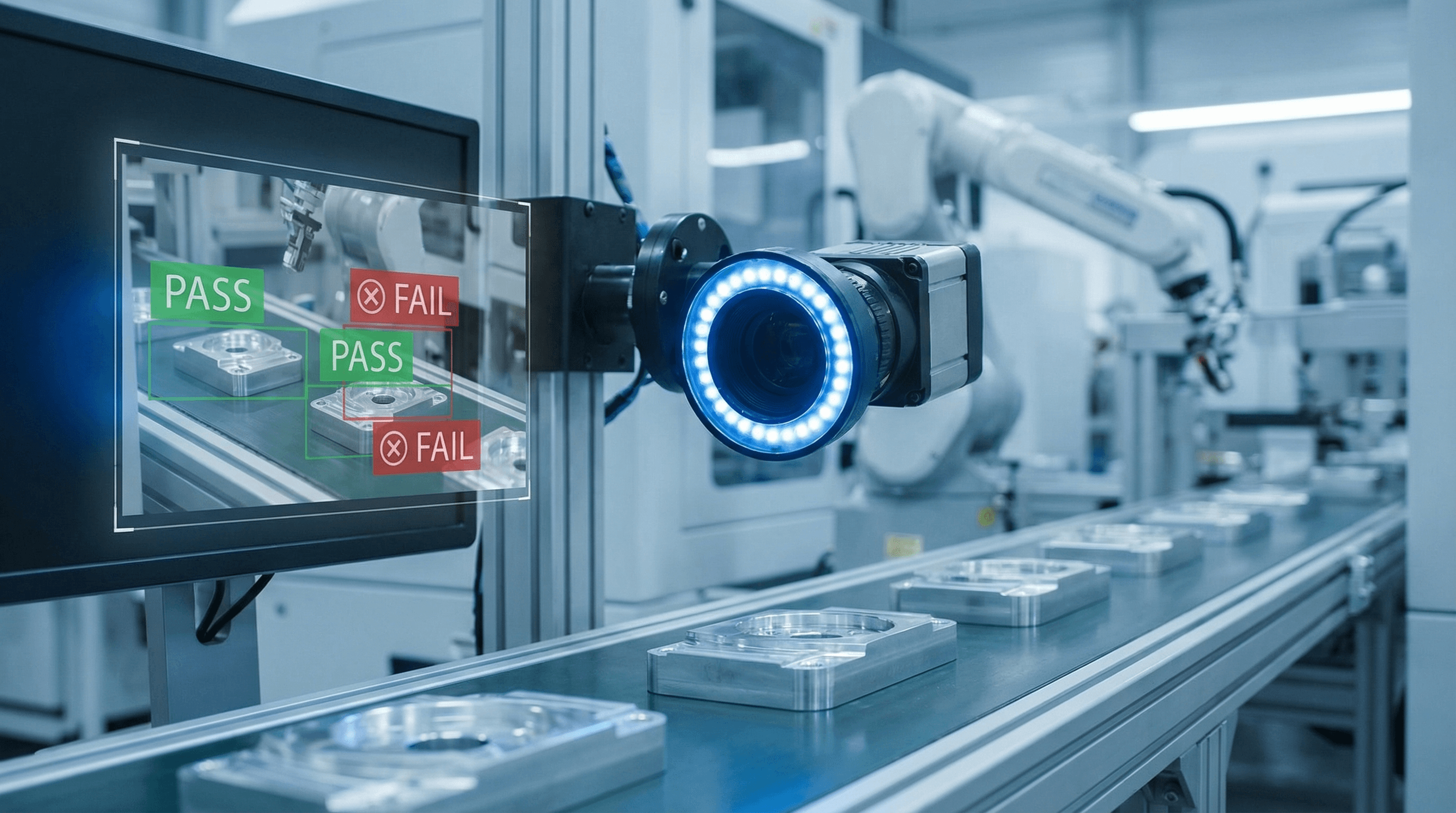
Defect Detection Fails Without Ground Truth Data
Quality engineers know AI vision starts with labeled images. Production lines generate millions of parts, but defects vary. A scratched aluminum housing looks different under LED lights than fluorescent. Operators tag NCR photos for training, yet datasets miss edge cases. Labeling takes 4-6 weeks for 50,000 images. One automotive supplier labeled 200,000 weld images; model accuracy reached 94% on validation but fell to 87% in production due to dataset imbalance where good parts outnumber defects 100:1.
False Positives Scrap Good Parts
False positives trigger NCRs on viable parts. A 2% false reject rate on a 1,000 ppm line means 20 good units scrapped hourly. Costs add up: $5 per part in aluminum extrusion yields $1,200 per shift loss. Operators override 30% of AI flags, eroding trust. Precision matters more than recall here. Reflections on shiny surfaces fool edge detection; oil residue mimics cracks. One electronics fab saw 4.5% false positives on SMT joints post-integration.
Integrating AI with Existing Vision Systems
Legacy Cognex or Keyence cameras run on PLCs tied to MES. AI bolts on via SDKs. Engineers pull frames from GigE Vision streams, process on edge GPUs like NVIDIA Jetson. Latency hits 50ms per frame; lines tolerate 100ms max. One aerospace line integrated via Python scripts on a Beckhoff PC. Throughput held at 45 parts/minute, but setup took 3 months. Compliance demands audit trails: log model version, inference time, and reject reasons.
Throughput Versus Accuracy Trade-offs
High accuracy slows lines. Full-frame inference on ResNet-50 takes 120ms; prune to MobileNet drops to 40ms but loses 3% accuracy. At 95% accuracy, throughput falls 18% due to re-inspects. Drop to 90% accuracy; throughput rises 12% but scrap climbs 2.5%. Adaptive sampling uses prior rejects to trigger full scans. One supplier cut inspection time 35% this way, holding yield at 97%.
Physical Hardware Constraints on the Line
Parts move on conveyors at 1m/s. Cameras capture 1/1000s exposures to freeze motion. Blur from vibration drops detection 25%. Die-cast zinc reflects glare; powder coat diffuses it. AI retrains per finish: 5,000 images per variant. Fixtures hold tolerances to 0.1mm; misalignment causes 15% false positives. Temperature swings affect cameras: CCD sensors drift 2% per 5 degrees C.