
On October 14, 2026, ASML used its third-quarter results to issue a supply warning. With that, the ASML capacity shortage in 2027 stopped being analyst speculation and became company guidance. "We now expect that our supply as currently planned for both 2027 and 2028 will not fully meet the demand of our customers," CEO Christophe Fouquet said in the Q3 2026 release. He added that "some customers are expressing an interest in placing orders with us for 2029 and even 2030."
Every advanced US fab project depends on these machines. Fab owners, construction contractors and the suppliers around them should read the warning this way: a fab's first-wafer date now depends on when its lithography tools arrive, more than on how fast the building goes up.
What ASML reported and what it said about supply
ASML reported Q3 2026 net sales of €11.7 billion, a gross margin of 57.5% and net income of €5.0 billion. For Q4 it guided to net sales of €14.2 billion to €15.2 billion at a gross margin of about 57%. Full-year 2026 guidance is now €44 billion to €45 billion, a narrower range than July's €43 billion to €45 billion, with a gross margin of about 56%, according to the company's release.
The financial results were not the main news. Fouquet attributed the demand to AI spending: "Our customers continue to increase their short- and medium-term equipment demand forecasts with us, driven primarily by their views on the size and duration of AI-related investments." He also said ASML is "investigating ways to increase capacity for 2028 beyond the 30% increase we previously communicated."
He was more direct on the earnings call. "30% in 2027, 30% in 2028 will not allow us to meet our customer demand. We have to do more," Fouquet said, according to Investing.com's transcript. He said customers "expect that their supply will not meet the demand at least until 2028."
How many scanners ASML can build
ASML set out its capacity plan in July. The Q2 2026 release said ASML planned "to add 30% to our 2026 low NA EUV capacity of around 65 for 2027" and was investigating "another 30% for 2028." It planned a similar 30% increase for 2027 on its 2026 DUV immersion capacity of about 130 systems.
Our own arithmetic, not an ASML figure: 30% on about 65 low-NA EUV systems comes to about 85 systems for 2027. Another 30% would bring 2028 to about 110. ASML is now saying that even those numbers fall short.
Most of 2027 was already spoken for in July. On the Q2 call, management said 2027 EUV capacity was "close to being fully covered with orders," according to The Motley Fool's transcript.
Outsiders now get less information on the order book. Starting in Q1 2026, ASML stopped publishing quarterly net bookings and moved to an annual backlog disclosure. It first announced the change at its November 2024 Investor Day (Yahoo Finance). Suppliers and investors can no longer track the queue quarter by quarter. Fouquet's qualitative statements are the best signal available between annual updates.
How scanner allocation reaches a US fab ramp
The following is our analysis. ASML has not disclosed how it allocates tools among customers.
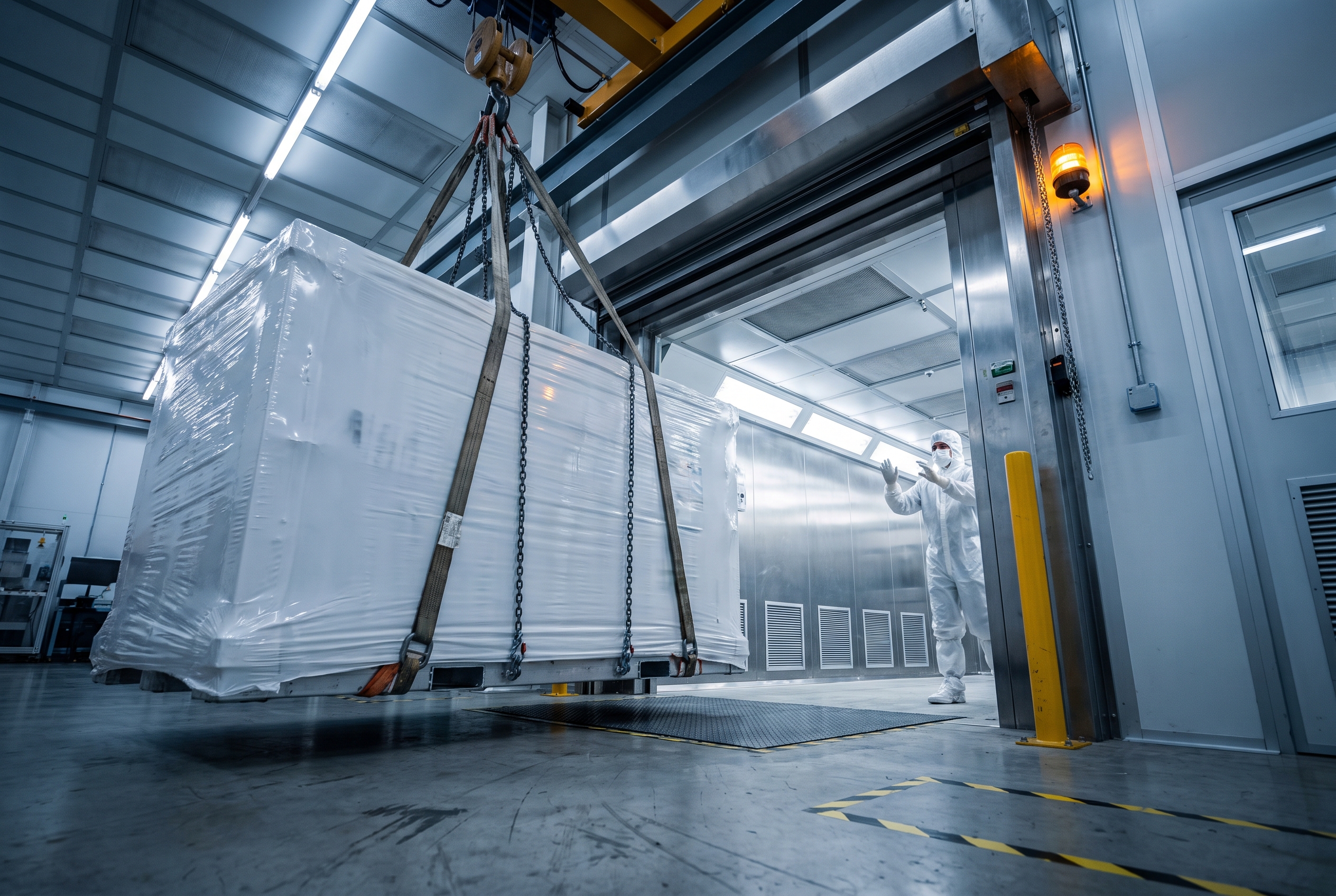
EUV and DUV immersion scanners sit on the critical path of a leading-edge fab. A building can be topped out, the cleanroom certified and the utilities commissioned, and the fab still cannot run production wafers on its most advanced layers until its lithography tools are installed and qualified. With 2027 EUV output close to fully ordered and ASML saying 2027 and 2028 supply falls short, a fab that has not secured slots cannot move its first-wafer date earlier, however quickly construction moves.
That changes how to read a project schedule. A groundbreaking says a site is being prepared. A confirmed tool move-in date says the owner has secured a place in a queue that ASML says will stay oversubscribed through at least 2028.
The exposure is not limited to logic. Micron's FY2026 10-K says: "We plan to increase EUV adoption at the 1δ (1-delta) DRAM node utilizing the latest-generation EUV tools." Memory ramps also depend on EUV supply.
US projects by readiness
The major US projects are at very different stages:
-
TSMC Arizona. TrendForce reported in December 2025, citing Nikkei Asia and Commercial Times, that TSMC expected to install equipment at Fab 2 in the July to September quarter of 2026, setting up 3nm production in 2027. TSMC's $165 billion Arizona plan covers five chip plants, two advanced packaging facilities and an R&D center. TSMC expects about 30% of its most advanced chips to be made in the US.
-
Micron Boise. Micron expects first wafer output from its first new Boise fab in mid-2027 and from the second in late 2028, Idaho News reported. Fiscal 2026 capex was $27.37 billion.
-
Samsung Taylor. TrendForce, citing Hankyung, reported in January 2026 that EUV trial operations at Taylor Fab 1 would start in March, against a 50,000-wafer 2nm target. In March, TrendForce, citing Korea JoongAng Daily, reported that full-scale production would slip to early 2027. Samsung said its "production start" milestone means completing mass-production preparations by the end of 2026.
-
Intel Ohio. Intel moved Mod 1 and Mod 2 operations to 2030 and 2031 from an original target of the end of 2026, Manufacturing Dive reported. Naga Chandrasekaran, EVP and chief global operations officer, cited "a prudent approach to ensure we complete the project in a financially responsible manner."
Our reading: the projects with the clearest near-term dates (TSMC Arizona and Micron Boise) are the ones tied to specific tool-install and first-wafer milestones. The Taylor and Ohio dates have each moved. In a market where ASML says 2027 and 2028 are oversubscribed, a project that slips may not get back to its original date quickly, because the scanner capacity it would need is already committed to other customers.
What SEMI's numbers say
SEMI's latest 300mm Fab Outlook, released October 13, 2026, projects global 300mm front-end equipment spending of $149 billion in 2026, up 31% from 2025, growing at double-digit rates to $227 billion in 2029. "Semiconductor demand is increasingly translating into physical manufacturing expansion across the global industry," said SEMI President and CEO Ajit Manocha.
SEMI expects Americas equipment spending to "more than double," from $18.1 billion in 2026 to $40.6 billion in 2029, about 2.2 times the 2026 level. EE Times Asia reported the same figures. Worldwide, SEMI counts 20 new 300mm fabs or lines starting construction in 2026, 3 of them in the US, and 18 in 2027, 4 of them in the US. It expects 13 new fabs or lines to begin operations or first silicon in 2026 and 23 in 2027.
The forecasts have kept rising. In October 2025, SEMI forecast global 300mm spending of $116 billion for 2026 and $374 billion for 2026 to 2028, with the Americas investing $60 billion over that period (eeNews Europe). In April 2026 it raised the 2026 figure to $133 billion and projected $151 billion for 2027, $155 billion for 2028 and $172 billion for 2029 (SEMI). The October release raised 2026 again, to $149 billion, and 2029 to $227 billion.
Our analysis: higher spending forecasts do not mean faster ramps when the scarcest tool is supply-constrained. If ASML's output is fixed for a given year, more customers wanting more tools in that year mostly makes the queue longer. Spending may also land later than planners expect, because a large share of equipment value arrives with the scanners and the tools that run alongside them.
Construction comes before tools
SEMI also forecasts global fab construction spending rising 23% to $47.5 billion in 2026, then 33% to $63.3 billion in 2027, before reaching $68.4 billion in 2028. Shell construction drives this demand first: general contractors, mechanical, electrical and plumbing trades, cleanroom builders, and process gas and chemical suppliers. Tool hookup, install and qualification work comes later, timed to scanner and tool delivery.
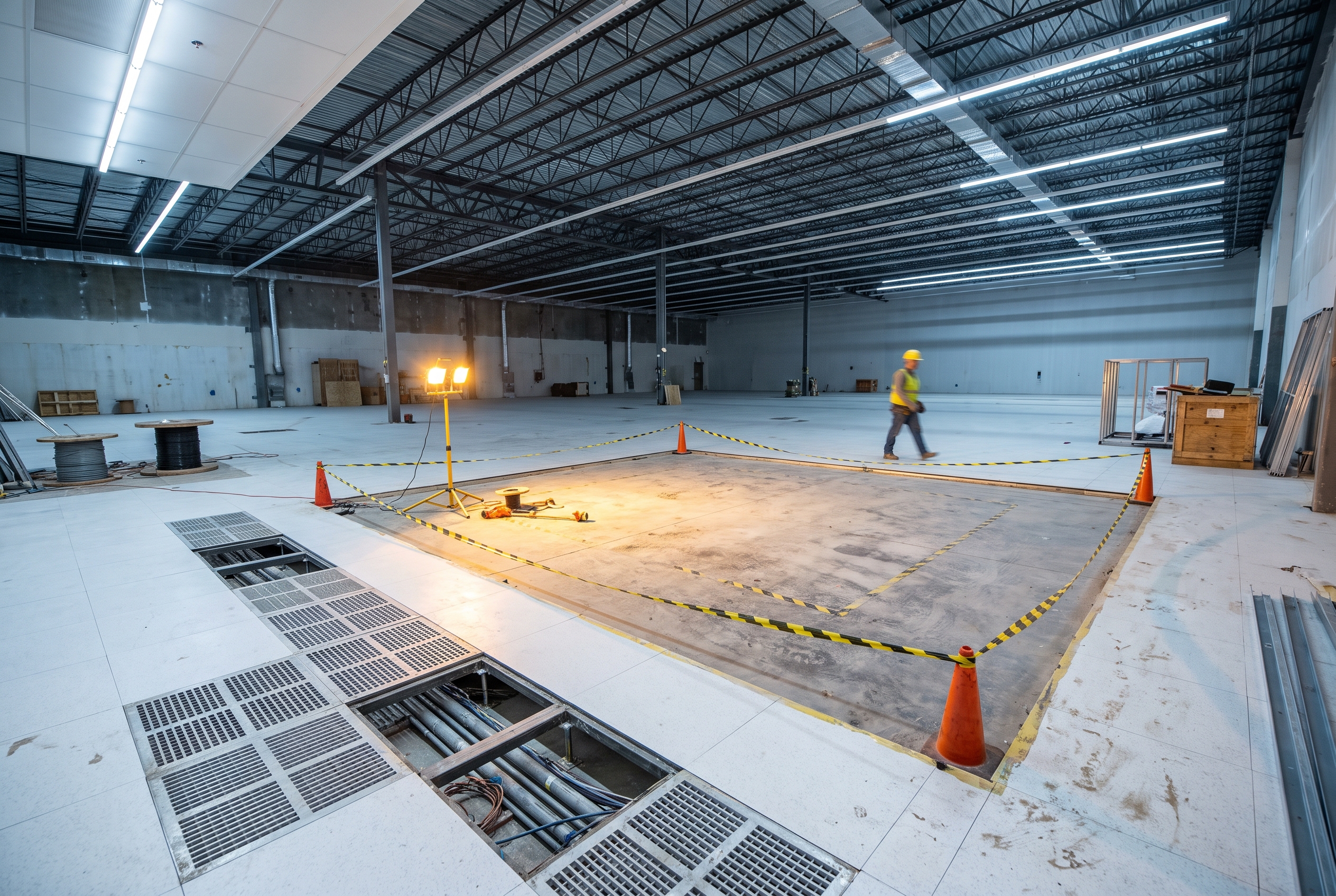
The gap between those two phases is where suppliers get caught. A cleanroom contractor can be fully booked on a site while the hookup subcontractor waiting on the same site sees nothing for months because the tools have not shipped.
What fab-adjacent suppliers should do
This is our guidance, based on the figures above, not advice from ASML or SEMI:
-
Key capacity plans to tool move-in and first-wafer dates. Groundbreakings and announced investment totals are weak scheduling signals. A customer's confirmed equipment install window is a strong one.
-
Ask about lithography slots. When you bid on fab-adjacent work, ask the owner or general contractor whether EUV and immersion tools are booked and for which quarter. A vague answer is useful information.
-
Build schedule buffers where volume or capital is not committed. Samsung Taylor and Intel Ohio show how far dates can move. Price and staff those jobs on the assumption that the schedule will change.
-
Plan for demand lasting through 2028 and beyond. Customers want to order for 2029 and 2030, ASML is studying capacity beyond its stated 2028 plan, and The Next Web reports that ASML's second Dutch campus is due in 2029. Multi-year commitments to labor, facilities and inventory carry less demand risk than usual, provided they are tied to projects with confirmed tool dates.
Risks and caveats
-
Forecasts keep moving. SEMI has raised its outlook in each of its last three releases. Forecasts that rise this quickly can also be cut.
-
China exposure. China was about 20% of ASML's 2026 revenue, according to the Q3 call. TNW reports it as "about a fifth." A change in that demand would change how much capacity is available to everyone else.
-
High NA timing differs by customer. On the Q3 call, Fouquet said Samsung will use High NA EUV in high-volume manufacturing starting in 2028, and that TSMC confirmed High NA introduction around 2030. ASML's Q3 materials also cite Samsung's plan to adopt High NA for DRAM manufacturing by 2028.
-
2028 capacity is still under study. ASML has said 30% more is not enough but has not announced a larger figure. Until it does, any 2028 tool schedule should be treated as provisional.
-
Less visibility. With quarterly bookings no longer published, the next firm read on the backlog comes with ASML's annual disclosure.
Related reading
-
A Supplier Audit Checklist That Starts With Corrective Action
-
How the Wolfspeed Pentagon loan could reshape a SiC supplier fresh out of Chapter 11