Submarine industrial base suppliers need four things before a prime will put their parts on a boat program. The first is material traceability built on objective quality evidence. The second is welders and procedures qualified to NAVSEA S9074-AQ-GIB-010/248. The third is NDT performed under T9074-AS-GIB-010/271. The fourth is NIST SP 800-171 controls for controlled unclassified information. Some work also requires a sponsored facility clearance.
The latest reason machine shops are asking about this is Arsenal-2. Anduril announced the shipyard on Oct. 6, 2026, for the Tradepoint Atlantic site at Sparrows Point in Baltimore County, Md. The headline figure of $6.6 billion combines two different kinds of money. According to DefenseScoop, Anduril is investing $3.7 billion of its own to build and staff the yard. The other $2.9 billion is a Navy contract ceiling. Naval News, carrying the announcement text, describes that contract as "up to $2.9 billion, with payments tied directly to demonstrated production outcomes."
The schedule matters as much as the money. The announcement says "initial operations are expected to come online in 2030, with production scaling progressively thereafter as Anduril builds the workforce, supplier base, infrastructure, and manufacturing throughput required for submarine production." A shop has several years to qualify. It does not have a near-term RFQ. Shops should spend that time closing gaps in their quality system, welding, NDT, cyber and security, because none of these can be fixed quickly once a quote request arrives.
Where the demand is today
Arsenal-2 is large. DefenseScoop reports 187 acres and more than 2 million square feet, and WMAR-2 News adds a 1,200-foot graving dock. The War Zone, citing the announcement, reports 3,100 direct jobs, more than 11,000 indirect jobs, $2 billion a year in economic output and an estimated $312 million a year in wages. Officials told The War Zone the yard "would add about 9 million hours of labor a year," which they described as roughly a 15% increase in production capacity.
The first products are modest. Breaking Defense reports the yard will "initially produce basic modules, such as torpedo tubes." The War Zone also lists spherical air flasks. Anduril aims to build full sections over time, eventually including bows and sterns. Those sections go to General Dynamics Electric Boat and HII Newport News Shipbuilding for final assembly. Before Arsenal-2 opens, an Anduril facility in Orange County will support "production of Virginia-class test assets and critical maritime components, including torpedo tubes," which Breaking Defense says gives the company "a two-year operational head start."
Anduril president and chief strategy officer Chris Brose presented the yard as added capacity, not a competitor to the existing builders: "This is not about taking food off the plate of anybody. This is about putting more food on the table." The announcement also says Anduril will build a supplier base. No source says what Arsenal-2 will buy from outside shops or whether it will subcontract machining. A tier-2 opportunity at the new yard is a reasonable inference, but it has not been confirmed.
The firmer demand signal arrived earlier. On July 29, 2026, the Navy awarded $76.6 billion in submarine contracts, according to Breaking Defense:
-
$42.1 billion for nine Block VI Virginia-class boats
-
$29.5 billion for five Build II Columbia-class boats
-
$5 billion for shipyard enhancements
The same report, citing GAO, says shipbuilders were delivering Virginia-class boats at a rate of one per year as of June 2025, half the Navy's target of two. That shortfall explains the funding. Rep. Joe Courtney said "thousands of small business manufacturers who are essential to the industrial base now have the certainty they have been asking for to make needed investments in hiring, facilities, and equipment." Electric Boat president Mark Rayha said the awards give "Electric Boat and our suppliers" the "demand certainty we need to continue investing in capacity and hiring."
For a plant manager, the multi-boat awards are the order book available now, and Arsenal-2 is a possible later customer. The qualification work below applies to both.
Checklist 1: Material traceability and objective quality evidence
Submarine quality rests on SUBSAFE. The Navy started the program in 1963 after losing USS Thresher. According to the Thresher Base summary, SUBSAFE certification "covers design, installed material, fabrication processes and as well as comprehensive testing." Records "back to original material composition as well as detailed testing results must be reviewed and retained throughout the life of a submarine."
The program's safety record explains why the Navy will not relax these rules. In a 2003 statement to the House Science Committee quoted by Thresher Base, RADM Paul Sullivan said, "In the 50 years since the inception of the SUBSAFE program, there has not been a loss of a SUBSAFE certified submarine." The Johns Hopkins LENS casebook counts 16 submarine losses in the 48 years before SUBSAFE and one in the 63 years since. That loss was USS Scorpion in 1968, which was not SUBSAFE-certified.
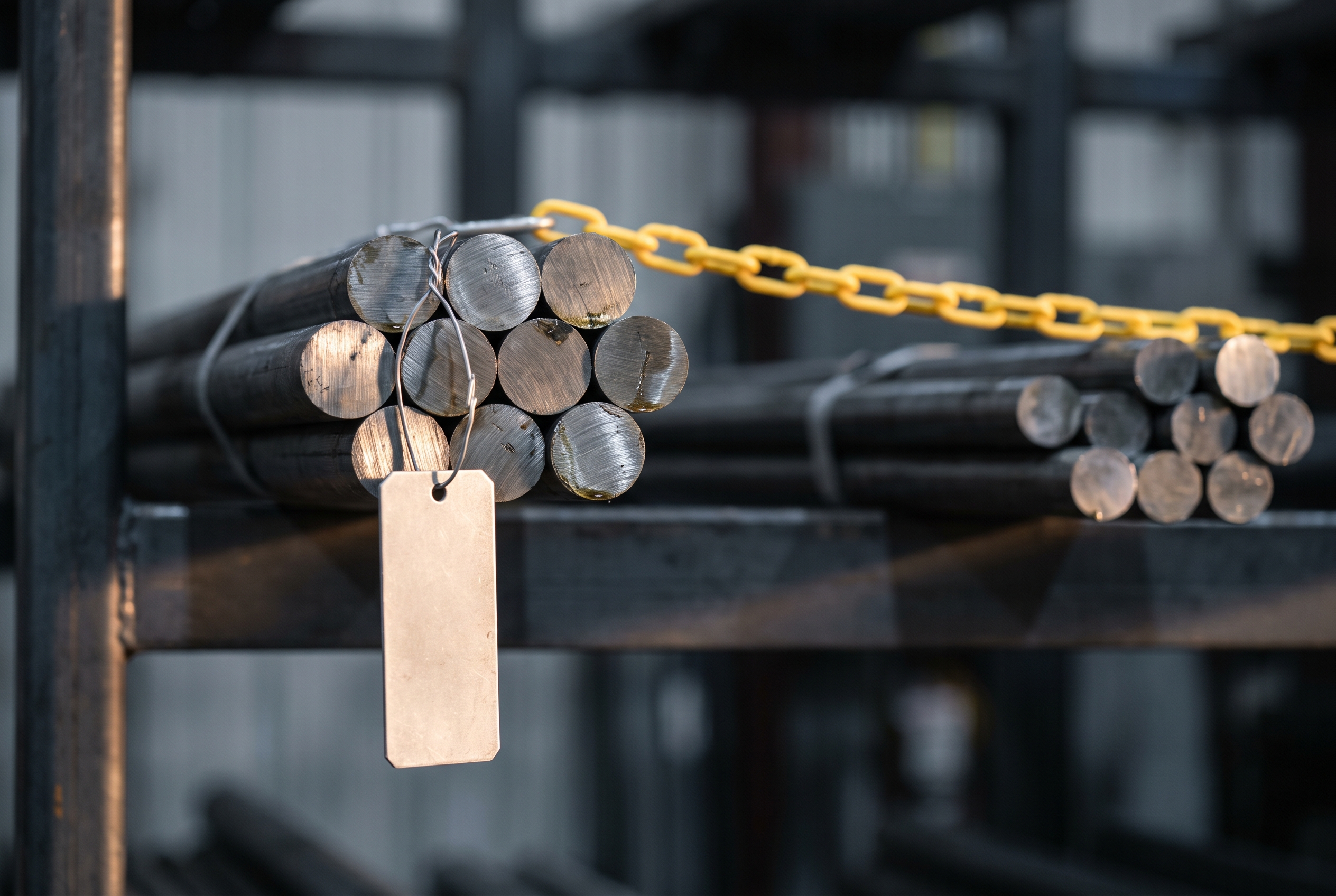
The principle that matters on the shop floor is objective quality evidence (OQE). SUBSAFE and Navy Level I material control both depend on it. If the evidence is missing, the part cannot be certified, even when it is good. A plant manager should ask these questions:
-
Receiving: Can you tie every piece of incoming stock to its mill certification and original material composition, and can you reject material when the paperwork does not match?
-
Storage and segregation: Can controlled material be kept physically and administratively separate from commercial stock, so it cannot be substituted on a busy second shift?
-
Marking and transfer: When a bar is cut into blanks, does the identification follow every piece?
-
Record retention: Can your systems keep records for the service life of a submarine, not just the length of a customer warranty?
The exact marking, segregation and documentation clauses come from the prime's purchase order and supplier quality requirements. Read those documents for the specific rules. Do not rely on secondhand summaries. If your traceability depends on a spreadsheet and one person's memory, that is the first gap to close.
Checklist 2: Welding qualification
If the work includes welding or brazing, NAVSEA S9074-AQ-GIB-010/248 sets the requirements. It covers "the qualification of welding and brazing procedures, welders, welding operators, brazers and brazing operators that must be met prior to any production fabrication." A shop's commercial or structural weld qualifications do not carry over automatically.
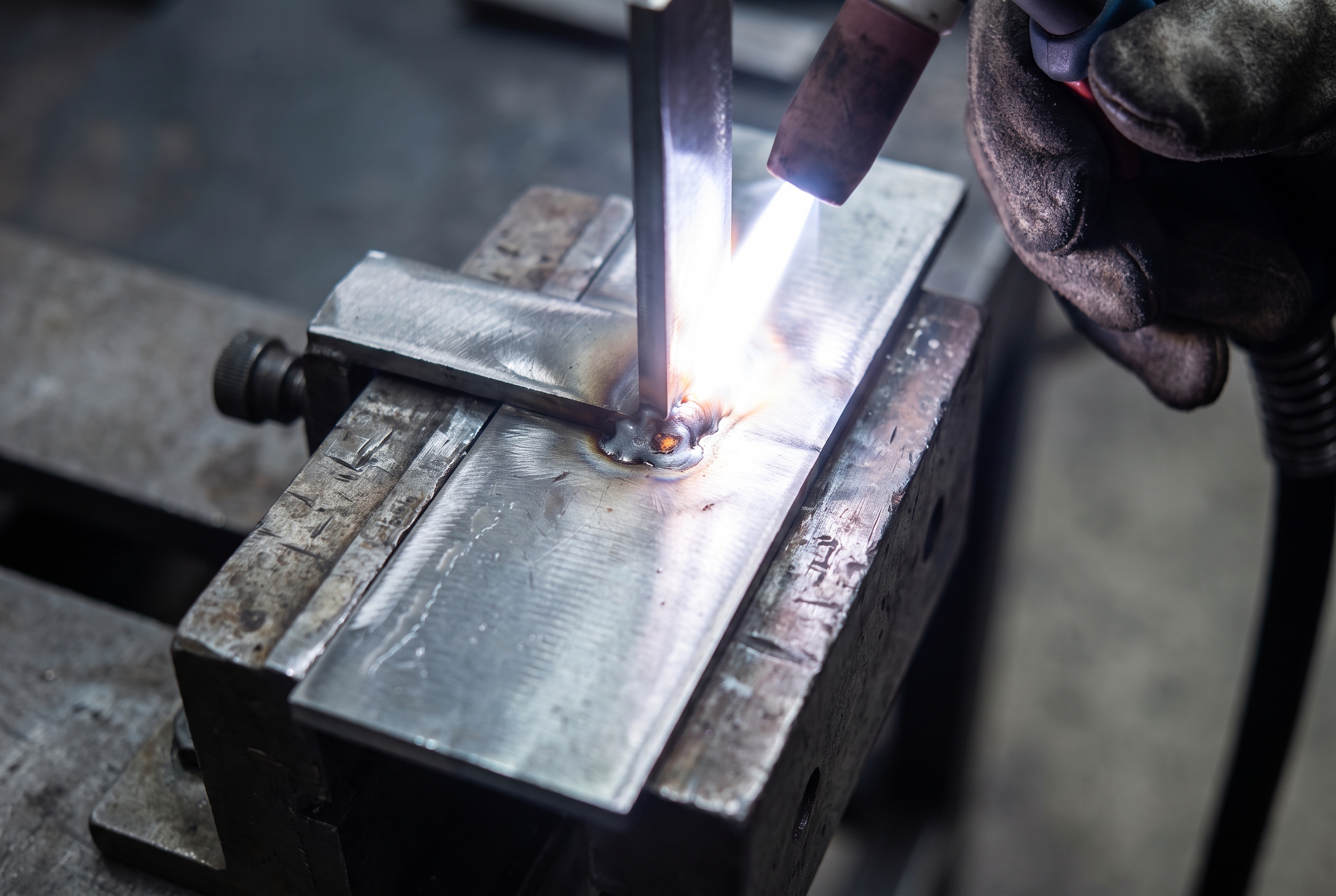
The words "prior to any production fabrication" decide the budget question. Qualification has to come before revenue. To qualify a cell, a shop takes it off paying work, runs test coupons, sends them for testing and pays for the welders' time while they qualify. The cost depends on how many processes, materials and positions the customer needs. It is best to scope this against a specific part family from a specific customer instead of trying to qualify for everything in advance. If qualification takes a working cell out of production, the downtime cost calculator separates lost contribution margin from incremental recovery costs. That makes it easier to compare the cost against the expected order value.
Checklist 3: Nondestructive testing
NAVSEA T9074-AS-GIB-010/271, "Requirements for Nondestructive Testing Methods," covers NDT for "internal and surface discontinuities in metals," according to the Intertek Inform abstract. Intertek lists Revision 0, issued in 1997, as withdrawn on April 29, 2024. Ask your customer which revision its purchase order invokes before you write procedures or train inspectors.
Personnel certification is the harder problem. ASNT's Naval Shipbuilders NDT Level III exam "aligns with the Navsea Technical Publication T9074-AS-GIB-010/271 requirements and is part of an employer-based certification system." A naval shipyard administrator must sponsor the candidate. The exam is open-book, with 50 questions in 2.5 hours, and has no fee. It is not open to the public. It is intended for Level III examiners at primes or sub-tier contractors serving Newport News or Electric Boat.
This leads to a make-or-buy decision. Building in-house NDT means a Level III who can only certify through a shipyard sponsor, so you need a customer relationship first. Buying NDT from a lab that already holds naval qualifications costs more per part but lets you start without that relationship. Most shops new to the work will buy NDT first and bring it in-house once the volume justifies it.
Checklist 4: Cyber and controlled unclassified information
Many shops are waiting on CMMC. That is a mistake. The Department of War suspended CMMC Phase 2 on July 13, 2026. Phase 2 was scheduled for Nov. 10, 2026, and would have required third-party (C3PAO) Level 2 certification. According to Morgan Lewis, the following obligations still apply: self-assessments, DFARS 252.204-7012, the 110 security controls in NIST SP 800-171 and score submissions to SPRS.
The schedule for CMMC is still unclear. Covington reported that the CMMC Reform Task Force sent its report to the DoW CIO on Sept. 11, 2026. The report had not been made public, and no new implementation dates had been set as of Sept. 21. Whatever the final rule says, a shop that receives controlled drawings needs a documented CUI enclave, a current self-assessment and an honest SPRS score now. Primes can see your score, and a weak one can lose a quote before anyone reviews your price.
Checklist 5: Facility clearance and sponsorship
Some submarine work requires a facility clearance (FCL). The most important rule is that you cannot request one on your own. "A company cannot self-nominate for an FCL," according to Bradley Arant Boult Cummings in the National Law Review. A government contracting activity or an already-cleared prime has to sponsor you. The rules are in the NISPOM, 32 CFR Part 117, and DCSA administers them.
What this means for a shop:
-
Key management personnel, meaning the senior management official, the facility security officer and the insider threat senior official, must hold personal clearances at or above the facility level. Make sure the people who would fill those roles are eligible.
-
DCSA reviews foreign ownership, control or influence. If you have overseas investors or a foreign parent company, sort that out before you look for a sponsor.
-
After a sponsorship is accepted, the company has 20 days to submit its package. Prepare corporate documents, ownership records and organization charts in advance.
Not every machined part requires a cleared facility. The contract's security requirements decide, so ask the prime early. Do not assume you need an FCL, and do not assume you don't.
Checklist 6: Capacity, capex and who pays for it
The Navy has spent money on suppliers for years. GAO-24-107732 found that "since 2018, the Navy reported receiving more than $2.6 billion to invest in the submarine supplier base." GAO-25-106286 reported that Congress provided $2.456 billion in FY2024 supplemental funding for the private submarine industrial base. BlueForge Alliance, the Navy's nonprofit integrator for the submarine industrial base, received a $950 million contract on Sept. 11, 2024, bringing its total to $1.3 billion, according to Breaking Defense.
GAO's caution matters as much as the dollar figures. In the 2024 report, GAO said the Navy lacked the metrics to show that its supplier investments were working. In 2025, it recommended investment metrics and a ship industrial base strategy. For a shop, this means program priorities and reporting requirements can change. If a machine, building expansion or training program is partly funded through a supplier development program, get the terms in writing before you sign: what you must deliver, what you must report, who owns the equipment and what happens if volumes fall short.
On the floor, consider these capacity questions:
-
Size: Torpedo tubes, air flasks and hull sections are large. Check that your machine envelopes, crane capacity, floor loading and shipping access can handle the parts you plan to quote.
-
Reserved capacity: First articles and qualification runs take spindle hours from paying work. Decide which machines you will dedicate and price the lost commercial throughput.
-
Demand duration: Multi-boat awards support a multi-year depreciation schedule better than a single job does. Base capex on demand from named customers, not announced totals.
How to get seen by the primes
The New England Submarine Shipbuilding Partnership maintains a searchable supply-chain database through SENEDIA. Companies can list their capabilities and certifications there, including AS9100, ISO and NADCAP. Listing is low-cost, and it keeps your shop visible to buyers. Use it together with direct contact through the prime supplier portals at Electric Boat and Newport News Shipbuilding.
For Arsenal-2, Anduril's Orange County operation is the earliest likely point of entry, since it will produce Virginia-class test assets and torpedo tubes before the Baltimore yard opens in 2030. Anduril has not said how it will source parts, so watch for supplier outreach rather than expecting it.
Bid/no-bid: a plant manager's list
-
Quality system gap: Can your receiving, segregation, marking and record retention produce objective quality evidence that lasts for the life of a boat? If not, budget the fix before you quote.
-
Weld qualifications: Which processes and materials does the target part family need under S9074-AQ-GIB-010/248, and which cell will you take offline to qualify them?
-
NDT path: Will you buy NDT from a qualified lab or build in-house capability that requires shipyard sponsorship? Confirm which 271 revision applies.
-
CUI enclave: Do you have a current NIST SP 800-171 self-assessment and SPRS score? The CMMC suspension does not change this.
-
Sponsor path: Does the work require an FCL? If it does, who will sponsor you, and are your key managers eligible for clearance?
-
Capacity reserved: Which machines, people and floor space are committed, and what commercial work will you give up to free them?
A shop that can answer all six is ready to quote. A shop that cannot has several years before 2030 to fill the gaps, and the existing primes are buying now.
Related reading
-
A Supplier Audit Checklist That Starts With Corrective Action
-
How the Wolfspeed Pentagon loan could reshape a SiC supplier fresh out of Chapter 11
-
The Hardest Manufacturing Jobs to Fill This Fall Are Hybrid Roles
-
Will Boeing's Engineer Offer Reset Pay at Aerospace Suppliers?
-
If Boeing Engineers Strike, Who Signs Off on Supplier Deviations?
-
The Strongest Machine-Tool Half in 28 Years — and Aerospace, Not Detroit, Is Signing the POs
Sources
-
DefenseScoop: White House, Anduril announce plans for new 'software-defined' shipyard (Oct. 6, 2026)
-
The War Zone: Anduril Dives Into Submarine Construction With New Baltimore Plant (Oct. 6, 2026)
-
WMAR-2 News: Trump visits Baltimore County to announce new $3.7B shipyard plans
-
Breaking Defense: Navy awards BlueForge Alliance new $950M contract (Sept. 11, 2024)
-
Morgan Lewis: Department of War Suspends CMMC Phase II Requirements (July 2026)
-
Covington, Inside Government Contracts: CMMC Reform Task Force Updates (Sept. 2026)
-
National Law Review / Bradley Arant Boult Cummings: Facility Clearances 101 (Oct. 2, 2026)
-
SENEDIA / New England Submarine Shipbuilding Partnership: Supply Chain Database