The hardest manufacturing jobs to fill this fall are not the ones most plant managers would have named five years ago. In Xometry's 2027 U.S. Manufacturing Outlook, released Oct. 1, 2026, executives put AI and automation operators at the top of the list, followed by quality engineers and maintenance technicians. Machinists and CNC programmers came after them. The federal labor data released over the past two weeks is consistent with that picture. Plants are adding very few workers, openings are still well above last year's level, and more of the people already on the floor are quitting.
Two notes on timing, since the releases overlap. The payroll and wage figures below come from the September Employment Situation report, released Friday, Oct. 2. The openings, hires and quits figures come from the August Job Openings and Labor Turnover Survey (JOLTS), released Sept. 29. All of them are preliminary.
How many manufacturing jobs were added in September 2026?
Very few. According to the BLS Employment Situation summary, manufacturing employment "was little changed in September (+9,000)" but "is up by 72,000 since a recent low in December 2025." Plastics and rubber products added 5,000 jobs and machinery added 5,000.
The broader economy was not much stronger. Nonfarm payrolls rose 29,000 and unemployment was 4.2%, both of which BLS described as little changed. Revisions to earlier months went down: July went from +21,000 to -10,000 and August from +162,000 to +133,000. Anyone planning headcount on the latest monthly print should keep in mind that the print can move substantially.
Factory employment is drifting up from its December low. That is a slow recovery, not a hiring boom, and the turnover data shows why it feels harder on the floor than the payroll line suggests.
Are manufacturing job openings rising or falling?
Both, depending on which comparison you use. BLS JOLTS Table 1 puts manufacturing job openings at 522,000 in August 2026. That is down 54,000 from 576,000 in July but up from 416,000 in August 2025, an increase that Manufacturing Dive reports as nearly 26%. The openings rate was 4.0%, compared with 4.4% in July and 3.2% a year earlier.
Durable goods account for almost all of the year-over-year increase:
-
Durable goods: 380,000 openings (4.6% rate), down from 423,000 in July but up from 252,000 in August 2025.
-
Nondurable goods: 142,000 openings (2.9% rate), below the 165,000 posted a year earlier.
The durable side covers machinery, transportation equipment, fabricated metals and electronics, which are the plants most likely to be running automated cells, CNC equipment and audited quality systems. That is the same group of jobs the Xometry respondents flagged.
Are factory workers quitting more?
Yes. BLS JOLTS Table 4 shows 197,000 manufacturing quits in August, up from 174,000 in July and 159,000 in August 2025. The quits rate rose to 1.6%, from 1.4% in July and 1.3% a year earlier. Nondurable goods accounted for 97,000 quits (a 2.0% rate) and durable goods for 100,000 (1.3%).
Hiring also picked up. BLS JOLTS Table 2 shows 332,000 manufacturing hires in August (2.6% rate), compared with 293,000 in July and 299,000 a year earlier. Manufacturing Dive, citing BLS, reported 95,000 layoffs and discharges in August and total manufacturing separations of 311,000, up nearly 3% year over year.
Put together, plants are hiring more people in order to stand still. Hires of 332,000 against separations of 311,000 leave a small net gain, which matches the weak payroll number. For a plant manager, more of the recruiting budget is going to replace people rather than add capacity.
The slack in the labor pool has also shrunk. Manufacturing Dive reported 423,000 unemployed manufacturing workers in September, compared with 571,000 a year earlier, a drop of nearly 26%. Fewer experienced factory workers are available to hire.
How fast are manufacturing wages rising?
Faster than wages across the private sector. BLS Table B-3 puts average hourly earnings in manufacturing at $36.92 in September 2026, compared with $35.70 a year earlier. That is a gain of $1.22, or about 3.4%. Average hourly earnings for all private nonfarm employees rose 3.0% over the same 12 months, to $37.81.
| Group | Sept. 2025 | Sept. 2026 |
|---|---|---|
| Manufacturing, avg. hourly earnings | $35.70 | $36.92 |
| Durable goods | $37.94 | $39.08 |
| Nondurable goods | $31.93 | $33.23 |
| Manufacturing, avg. weekly earnings | $1,428.00 | $1,498.95 |
Two details matter for wage planning. First, the average manufacturing hourly wage is still below the all-private average even though it is growing faster, so factories are catching up rather than leading. Second, nondurable goods pay about $5.85 an hour less than durable goods, and nondurable goods also had the higher quits rate in August. Food, plastics, paper and chemical plants are competing for hourly workers with both durable goods manufacturers and employers outside manufacturing.
What are the hardest manufacturing jobs to fill?
According to Manufacturing Dive's reporting on Xometry's survey of 150 manufacturing executives, these are the shares of respondents naming each role as hardest to fill:
-
AI and automation operators: 34%
-
Quality engineers: 31%
-
Maintenance technicians: 29%
-
Machinists: 23%
-
CNC programmers: 20%
The Xometry release states it directly: "AI and automation operators have become manufacturing's hardest role to fill, ahead of quality engineers, maintenance technicians, and CNC programmers." Manufacturing Dive quotes Xometry CEO Sanjeev Singh Sahni: "AI is moving earlier into the manufacturing process, and the skills our industry needs are moving with it."
1. AI and automation operators (34%)
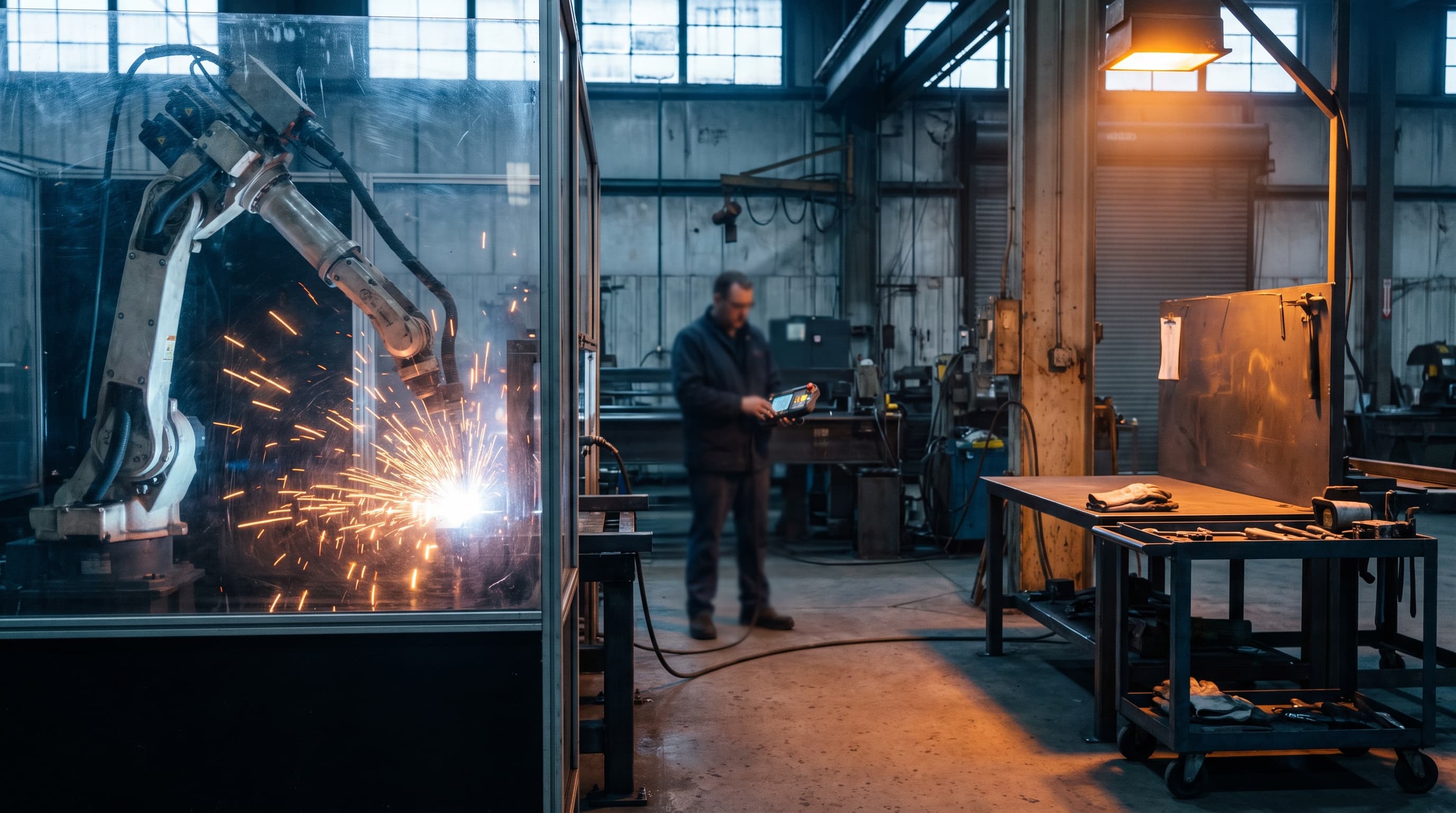
This is a job that plants have created themselves. Every cobot cell, vision inspection station or AI scheduling tool needs someone on the floor who can run it, recover it after a fault and tell when its output looks wrong. According to the Xometry release, 57% of manufacturers now report significant returns on AI investment, up from 44% a year earlier. As more of those projects pay off, more plants are deploying them, and the demand for people who can run them grows faster than any ready-made labor pool.
There is no established pipeline for this role. A machinist has a recognized apprenticeship path. An automation operator is usually an experienced production worker who has been cross-trained on controls, basic programming and troubleshooting. Most plants will have to train this person internally, so the cost of training should be in the automation business case from the start rather than discovered after the cell goes in.
2. Quality engineers (31%)
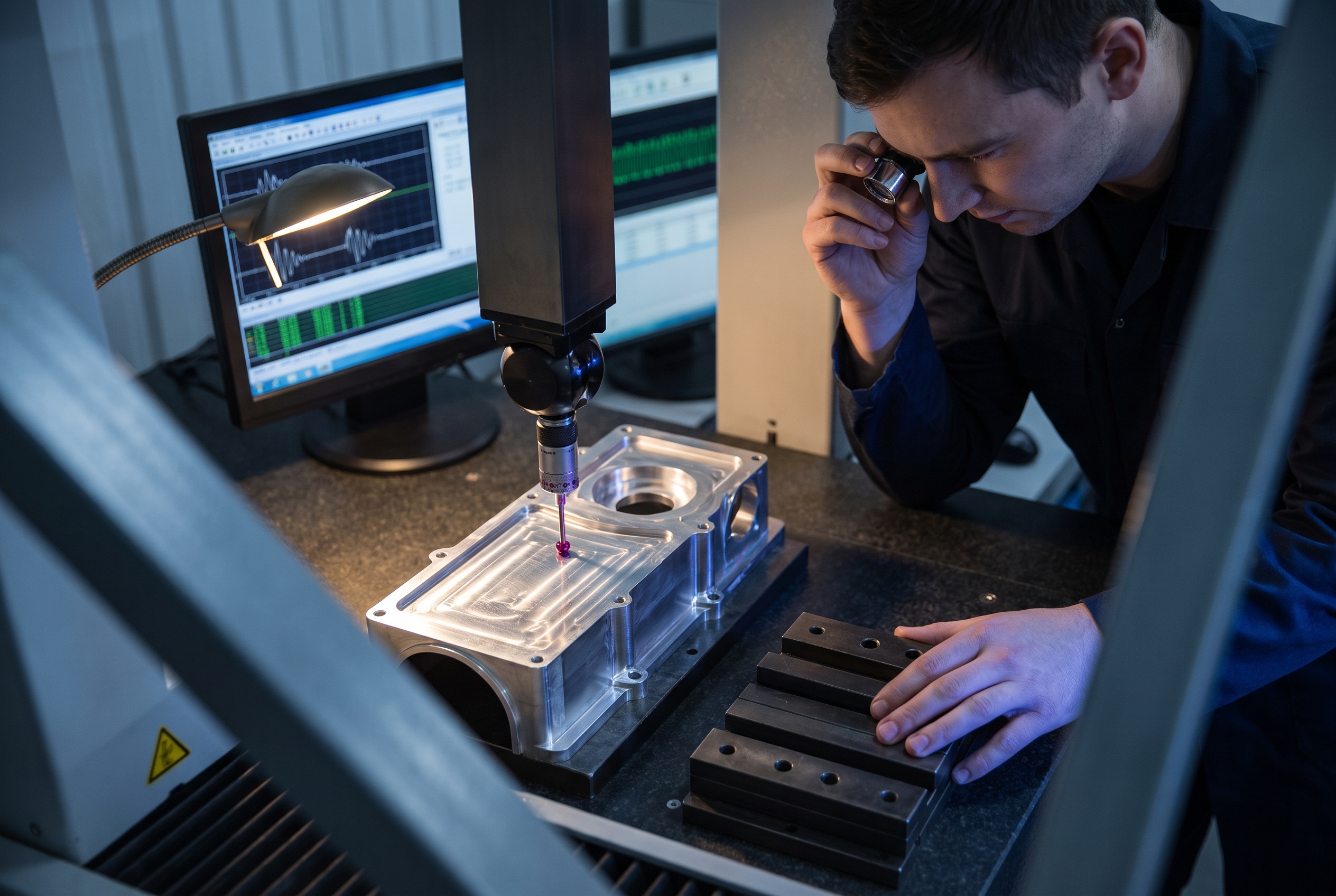
Respondents expect AI to have a large effect on quality control: 47% named it as an area of AI's biggest impact, behind manufacturability and costing (51%) and ahead of production execution (32%), per the Xometry release. Our editorial read, which goes beyond the survey data: AI inspection and analytics tools produce more data, but someone still has to own the control plan, decide what counts as a nonconformance, and stand in front of a customer or registrar during an ISO 9001, AS9100 or FDA audit. That accountability does not move to software. Plants adding AI to quality are likely to need more quality engineering judgment, not less.
3. Maintenance technicians (29%)
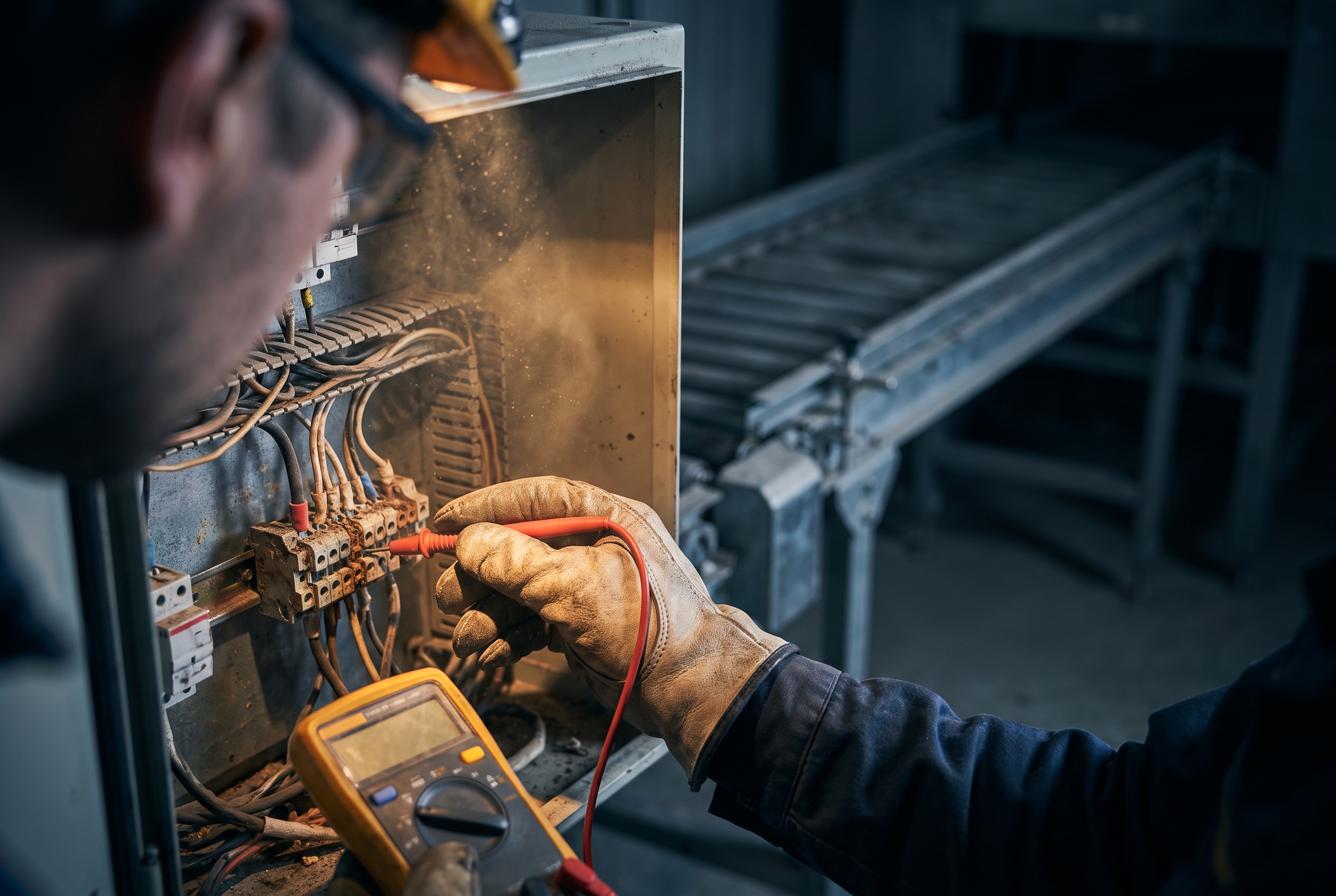
An open maintenance position costs a plant money in a way most others do not, because its cost shows up as unplanned downtime. When a line goes down and the qualified tech is on another shift, or the position has been empty for months, the plant loses output it cannot recover and often pays for overtime, expedited parts or outside service as well.
To put a figure on that seat, use our downtime cost calculator. It separates the contribution margin lost on output you did not ship from the incremental costs of recovery, such as overtime, expediting and scrap. Run it on a realistic estimate of the extra downtime hours you are absorbing because a position is open, and compare the result with the fully loaded cost of a technician plus a signing or retention premium. At many plants the open position costs more than the wage increase it would take to fill it.
More automation also raises the skill level required. A technician who was strong on hydraulics and mechanical drives now also needs to read ladder logic, troubleshoot servo faults and work with the vision systems feeding the AI tools above. That overlap is one reason the top three roles cluster together.
4 and 5. Machinists (23%) and CNC programmers (20%)
The established trades still rank on the list, but behind the newer hybrid roles. That does not mean machinists are easy to hire. It suggests the trades pipeline (community college programs, apprenticeships, union and employer training) is producing at least some supply, while the automation, quality and maintenance roles have no comparable pipeline yet. For a job shop whose output depends on spindle hours, a missing machinist still idles a machine. The ranking shows where the market is short of people, not which roles matter to a given plant.
Why doesn't raising pay solve the manufacturing labor shortage?
For many plants, especially smaller ones, it has not. According to the Xometry release, "A quarter of manufacturers say raising pay produced no meaningful improvement in hiring or retention, and larger companies are having far more success with it than smaller ones." Manufacturing Dive reports that 81% of firms with more than 500 employees saw results from raising pay, compared with 46% of firms with fewer than 200.
The likely reasons are structural, and they are our analysis rather than survey findings. A large plant raising pay can usually offer a full benefits package, shift choice, internal promotion paths and a training department along with the higher wage. A 120-person shop that matches the hourly rate is still offering a narrower job, and the larger competitor can raise again. With manufacturing wages already rising faster than the private-sector average, a wage-only strategy for a small shop means competing in a bidding war against companies with more money.
Pricing makes this harder. The Xometry release says 94% of manufacturers plan to raise prices in 2027. Some of that will cover labor costs, but a tier-2 supplier with a fixed-price contract and an OEM customer pushing for cost-downs cannot always pass wage increases through. That leaves less room for repeated raises.
What should mid-market manufacturers do instead?
Wages still need to be competitive. Beyond that, the shops doing better are investing in their own pipelines, keeping the people they have, and choosing automation with its staffing needs in mind.
Turn school partnerships into a real pipeline
According to Manufacturing Dive's reporting of the Xometry survey, 91% of respondents partner with schools, technical colleges or training programs, but only 59% describe those relationships as "active and formal rather than occasional." That gap is where a mid-market plant can gain an edge. A formal partnership has a named owner at the plant, a curriculum the plant helped shape, paid work-based learning or a registered apprenticeship, and a defined hiring path at the end. An occasional plant tour does not produce hires.
Start with the role you most need. If maintenance is your bottleneck, build the program around mechatronics and controls, not general manufacturing awareness. Treat it as capex for the workforce: set a multi-year budget, measure cost per completed hire, and track how long graduates stay.
Price retention against replacement
With quits rising, every departure starts a replacement cycle: recruiting, onboarding, a ramp-up period with lower output and higher scrap, and often overtime for the people covering the gap. Build a simple model of that cost for each critical role, using your own data. For maintenance and quality roles, add the downtime and escape risk while the position is open. Once that number is on paper, spending on retention (shift differentials, skill-based pay steps, a paid certification path, predictable schedules) becomes a capex comparison rather than an HR request.
Choose automation knowing what it does to headcount
Automation does two things to staffing at the same time. It can reduce the number of operators a cell needs, and it creates demand for the hard-to-find automation operator, maintenance and quality roles described above. Before approving a cell, write down who will run it, who will maintain it and who will own its quality data, and whether those people already work for you. If the honest answer is "we will hire them," include that hiring difficulty and its timeline in the payback calculation. A cell that removes three general operator positions but needs one automation tech you cannot find will not deliver on schedule.
The best candidates for these new roles are usually already on the payroll. Production workers who know the process, the parts and the failure modes are a better starting point for an automation operator than an outside hire who knows the robot but not the product.
Caveats on the data
-
Vendor survey, small sample. Xometry is a manufacturing marketplace, and per Manufacturing Dive the outlook surveyed 150 manufacturing executives. The role percentages come from Manufacturing Dive's reporting of the survey. Read the ranking as directional, not as a census of the labor market.
-
Preliminary federal data. The September payroll and wage figures and the August JOLTS figures are preliminary and will be revised. July and August payrolls were already revised down in the latest release.
-
Different reference months. Openings, hires and quits are August data. Payrolls and wages are September data.
Related reading
-
Amazon Plans to Hire Welders for Its Greenwood, Indiana Plant
-
Machinery and Fabricated Metal Carried August's Factory Hiring
-
25,000 Steelworkers Are on a 30-Day Clock. Boeing's 17,000 Engineers Come Back to the Table Sept. 8.
Sources
-
BLS, Employment Situation Summary, September 2026 (released Oct. 2, 2026)
-
BLS, Employment Situation Table B-3: Average hourly and weekly earnings by industry
-
Manufacturing Dive, "Manufacturing industry adds 9K jobs in September" (Sara Samora, Oct. 2, 2026)
-
Xometry 2027 U.S. Manufacturing Outlook press release, via Stock Titan (Oct. 1, 2026)