Honda said on Nov. 9, 2026 that it will spend $3 billion on a new auto assembly plant in Central Ohio. The site is in Union County, between its existing East Liberty and Marysville auto plants, and will be Honda's fourth auto plant in the state. It's sized for 240,000 vehicles a year and is expected to start production in 2029, pending final government approvals. For Honda Ohio hybrid plant suppliers, though, the date that matters comes earlier. Honda Transmission Plant-Ohio in Russells Point, which builds the company's two-motor hybrid system, is preparing a next-generation system for production in 2027. It's also being retooled to raise Ohio hybrid system capacity by 250 percent, according to Honda's release.
For a purchasing or operations manager, that sequence counts for more than the assembly plant. Compared with a gas car, a hybrid adds motors, power electronics and a battery, and Honda builds that system itself. Outside suppliers who want a share of the added content are working to the transmission plant's 2027 schedule, two years before the first vehicle comes off the new line.
The package covers several plants
The new plant is the headline, but the same announcement retools plants across three states and Ontario:
-
Honda Transmission Plant-Ohio (Russells Point): retooling for two next-generation hybrid systems. The plant currently builds the two-motor hybrid system for U.S.-built CR-V, Accord and Civic.
-
Anna Engine Plant (Ohio): Honda calls it its largest engine plant in the world. An existing line is being retooled for a next-generation 4-cylinder Atkinson-cycle engine, and an on-site parts consolidation center is being expanded, with operation expected in 2027.
-
Honda Transmission Plant-Georgia: a new transmission assembly line will produce next-generation hybrid systems for larger vehicles "in the coming years."
-
Alabama Auto Plant: engine production is being retooled for a new V6 hybrid engine, and Line 1 is being updated to build the Passport, which is currently built only on Line 2.
-
Alliston, Ontario: being retooled for next-generation hybrid and gasoline models, and engine manufacturing is returning there.
Ohio puts Honda's new commitment in the state at $3.38 billion and 2,390 jobs, including the Anna and Russells Point upgrades, per JobsOhio. Honda's own release says the new plant will create more than 2,000 jobs. CNBC describes it as Honda's first new mass-production U.S. assembly plant since the Indiana plant opened in 2008. Honda says the investments will take its U.S. auto capacity to about 1.3 million vehicles a year and North American capacity to about 1.9 million, per the global newsroom version of the release.
Demand is the reason behind it. In May 2026 Honda announced plans for 15 new Honda and Acura hybrid models globally by 2030 and said North America is expected to be the primary market for many of them. "These investments strengthen America's role as a cornerstone of Honda's global future," said Bob Nelson, executive vice president of American Honda Motor Co.
What Honda hasn't disclosed
Any estimate of supplier content runs into several gaps. Honda hasn't said which models the Union County plant will build or how much of its output will be hybrids. The release describes "flexibility to produce multiple vehicle types and powertrains," meaning hybrid, gasoline and battery-electric, with hybrids as the priority. The 250 percent figure has no published baseline. EVXL notes that Honda gave no hybrid production figures, so the actual unit volume at Russells Point can't be worked out from public information. The Ohio Tax Credit Authority approved a tax credit without disclosing its terms. JobsOhio assistance will be made public only after a final agreement is executed.
For a supplier, that means you can see the direction of the content but not the quantity. Treat any volume number in an early RFQ as Honda's to supply, not something to infer from the press release.
What's inside Honda's two-motor hybrid
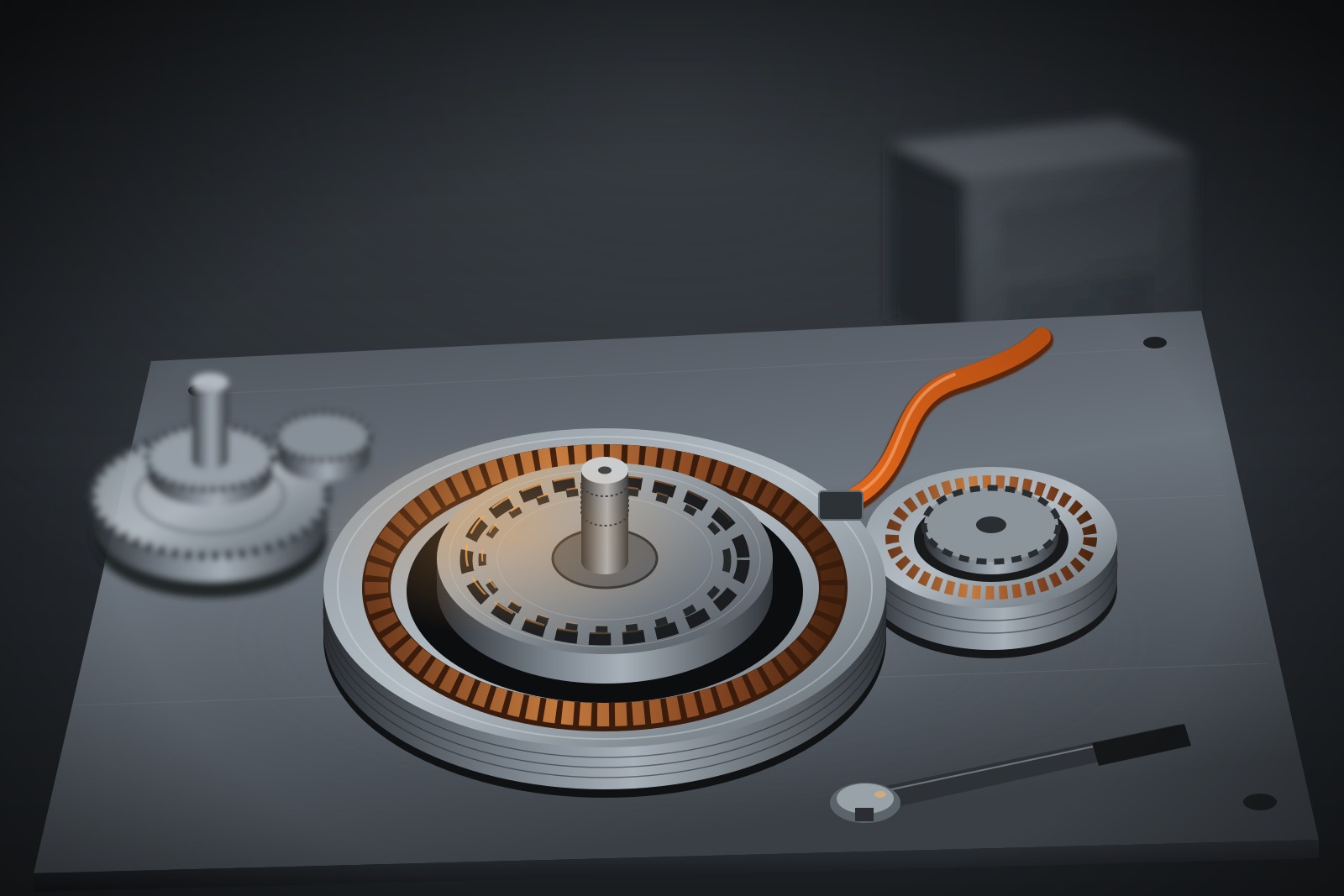
Honda's e:HEV technology page describes the architecture built at Russells Point:
-
A traction motor "directly connected to the driveshaft," using a magnet "free of heavy rare earth elements."
-
A generator motor "directly connected to the engine."
-
A power control unit built around a power drive unit that converts battery current to AC.
-
A lithium-ion battery paired with a control ECU.
-
An Atkinson-cycle engine.
-
A lock-up clutch with a ratio "equivalent to the top gear in a manual transmission" for direct engine drive at highway speed.
Honda says the design eliminates "complicated mechanisms necessary to mix battery/engine power or the transmission system." That's the most important line for anyone who supplies a conventional automatic: the multi-speed gearbox is replaced by one fixed-ratio path.
The U.S. Department of Energy's Alternative Fuels Data Center gives a neutral version of the same comparison. Its generic hybrid list adds an auxiliary low-voltage battery, a DC/DC converter, an electric generator, a traction motor, a power electronics controller, a traction battery pack, and a thermal system that cools the engine, electric motor and power electronics. Items shared with a gas car include the fuel tank, a spark-ignited engine, and an exhaust system with a three-way catalyst. The DOE list also keeps a transmission, but Honda's architecture swaps the conventional unit for the lock-up clutch path.
The next generation pushes cost harder. At a 2024 e:HEV briefing, Honda described all-new 1.5-liter and 2.0-liter direct-injection Atkinson-cycle engines and a front drive unit with "downsized packaging." It said it aims to cut the cost of each hybrid model by "up to 50%" for a 2027 launch compared with the same model in 2018, and noted that the North American Accord hybrid had already achieved "a 25% cost reduction" against its 2018 version. The next-generation mid-size platform is about 90 kg lighter and has more than 60 percent parts commonality. Our reading: suppliers should expect quotes on the new system to carry aggressive cost targets and to favor parts that can be shared across models.
A qualitative commodity map
No verified source gives dollar or kilogram content by commodity for these vehicles, so the map below shows direction only. It's our analysis, built from Honda's architecture and the DOE component list.
| Commodity group | Direction vs. a gas car | Basis |
|---|---|---|
| Electric motor inputs (magnets, laminations, copper winding) | Gains | Two motors per vehicle, traction and generator |
| Power semiconductors and power electronics assemblies | Gains | PCU and power drive unit; DC/DC conversion in the DOE list |
| Battery cells, modules, pack hardware and control electronics | Gains | Lithium-ion traction battery with ECU |
| Thermal management for motors and electronics | Gains | DOE lists cooling for motor and power electronics |
| High-voltage wiring and connectors | Gains | Links battery, PCU and motors |
| Multi-speed transmission gearsets, clutch packs, related castings and machining | Pressured | Replaced by a single fixed-ratio lock-up clutch path |
| Engine | Retained, with a changed specification | New 1.5L and 2.0L direct-injection Atkinson-cycle engines; V6 hybrid engine in Alabama |
| Fuel tank, exhaust and catalyst | Retained | Shared ICE content per DOE |
The engine row deserves attention from machining and casting shops. Content stays in the vehicle, but the part numbers change. Anna is retooling for a new 4-cylinder Atkinson engine, Alabama for a V6 hybrid, and Alliston is getting engine manufacturing back. Each of those means new drawings and new qualification work for incumbent suppliers.
Honda builds the system, suppliers feed it
Honda already makes the two-motor hybrid system at Russells Point, so content at the system level stays inside Honda. Outside opportunities are at the sub-component level: motor inputs, electronics, battery hardware, thermal parts and harnesses that go into an assembly Honda puts together itself. The Anna parts consolidation center, also due in 2027, adds a logistics layer that suppliers will likely ship into.
Battery cells are the hardest category to read. Honda lists its L-H Battery Company joint venture, which "will have the flexibility to produce battery cells," among its reasons for choosing Ohio. EVXL reports a separate $2.86 billion agreement for Honda to acquire factory assets from its Ohio battery venture with LG Energy Solution. If Honda draws cells from a facility it controls, the outside opportunity in that category moves toward pack hardware, enclosures and thermal parts rather than cells.
Honda says it works with more than 750 original equipment suppliers in North America and has bought more than $631 billion in parts cumulatively since 1982. It cited proximity to much of its U.S. supply base as a reason for picking Ohio, along with a skilled workforce, nearby development centers and its existing engine and hybrid system plants. Ohio Gov. Mike DeWine put it this way: "Honda's leadership could have chosen to build this plant anywhere in the world, but they chose Ohio." For incumbents within trucking distance of Union County, Russells Point and Anna, that's a structural advantage worth defending.
Working backward from the verified dates
The public milestones are:
-
2027: next-generation hybrid system enters production at Honda Transmission Plant-Ohio (the release says "next year").
-
2027: Anna parts consolidation center expected to begin operation.
-
"In the coming years": Georgia's large-vehicle hybrid system line and the full 250 percent capacity increase in Ohio.
-
2029: Union County assembly start of production, pending final approvals.
A supplier's sequence before any of those dates runs through quoting, tooling build, capacity installation, PPAP and safe launch. How long each step takes depends on the part and the shop. What matters here is the order. A sub-component supplier to the next-generation hybrid system has to finish all of it before Russells Point starts production in 2027, and work for the first-generation volume of that system may already be awarded. The 2029 assembly date matters mostly to suppliers of vehicle-level content such as body, interior and chassis parts, and even they can't quote seriously until Honda assigns models to the plant.
Operator checklist
-
Sort your current Honda part numbers into retained, changed and removed content against the e:HEV architecture. Transmission-related machining and castings belong in the removed or pressured column for any hybrid model. Engine parts belong in the changed column.
-
Check capability against the gaining categories: motor laminations and winding, power electronics assembly, battery enclosures, thermal management for electronics, and high-voltage harnessing. Where you're short, decide now whether to build the capability, partner for it or skip it.
-
Plan capacity against the 2027 system launch, not the 2029 assembly date. If you're a current Russells Point or Anna supplier, ask your buyer directly how the 250 percent increase phases in.
-
Line up second sources for any sub-tier input you can't make yourself, and expect Honda's cost-reduction targets to come through in pricing.
-
Watch two announcements: model assignments for the Union County plant, and the executed JobsOhio agreement, which may attach conditions on timing or jobs.
Risk box
Tariffs. Nelson told CNBC that "Tariffs are an impact to us, even with the high localization rate that we have," and added that unmet customer demand is the real issue. CNBC also reports that President Trump has threatened to raise tariffs on Canadian vehicles and parts from 25% to 50% on Jan. 1. That matters to anyone shipping into or out of Alliston.
EV pullback. CNBC reports that in May Honda indefinitely suspended an $11 billion EV and battery investment plan in Canada and canceled three planned U.S. EVs. A supplier who capitalized for battery-electric volume should treat hybrids as the nearer-term program.
Flexible plant. The Union County plant can build hybrid, gasoline or battery-electric vehicles. That protects Honda against shifts in demand, but it leaves the powertrain mix at the new plant unknown until models are assigned.
Related reading
-
What Plant Data Does NVIDIA FOX Need Before Agents Can Help?
-
Why Audi Georgia Plant Suppliers Should Qualify Now and Hold Capex
Sources
-
Honda to Boost U.S. Hybrid Production with New $3 Billion U.S. Auto Plant and Investments in Multiple Facilities (Honda news release)
-
Honda to invest $3 billion in new vehicle assembly plant in Ohio (CNBC)
-
Honda Plans $3 Billion Ohio Plant to Expand Hybrid Production (EVXL)
-
e:HEV, Original Honda Hybrid System (Honda technology page)
-
Honda Presents Next-generation e:HEV Technologies at Press Briefing on Honda e:HEV Business and Technology (Honda, 2024)
-
How Do Hybrid Electric Cars Work? (U.S. DOE Alternative Fuels Data Center)