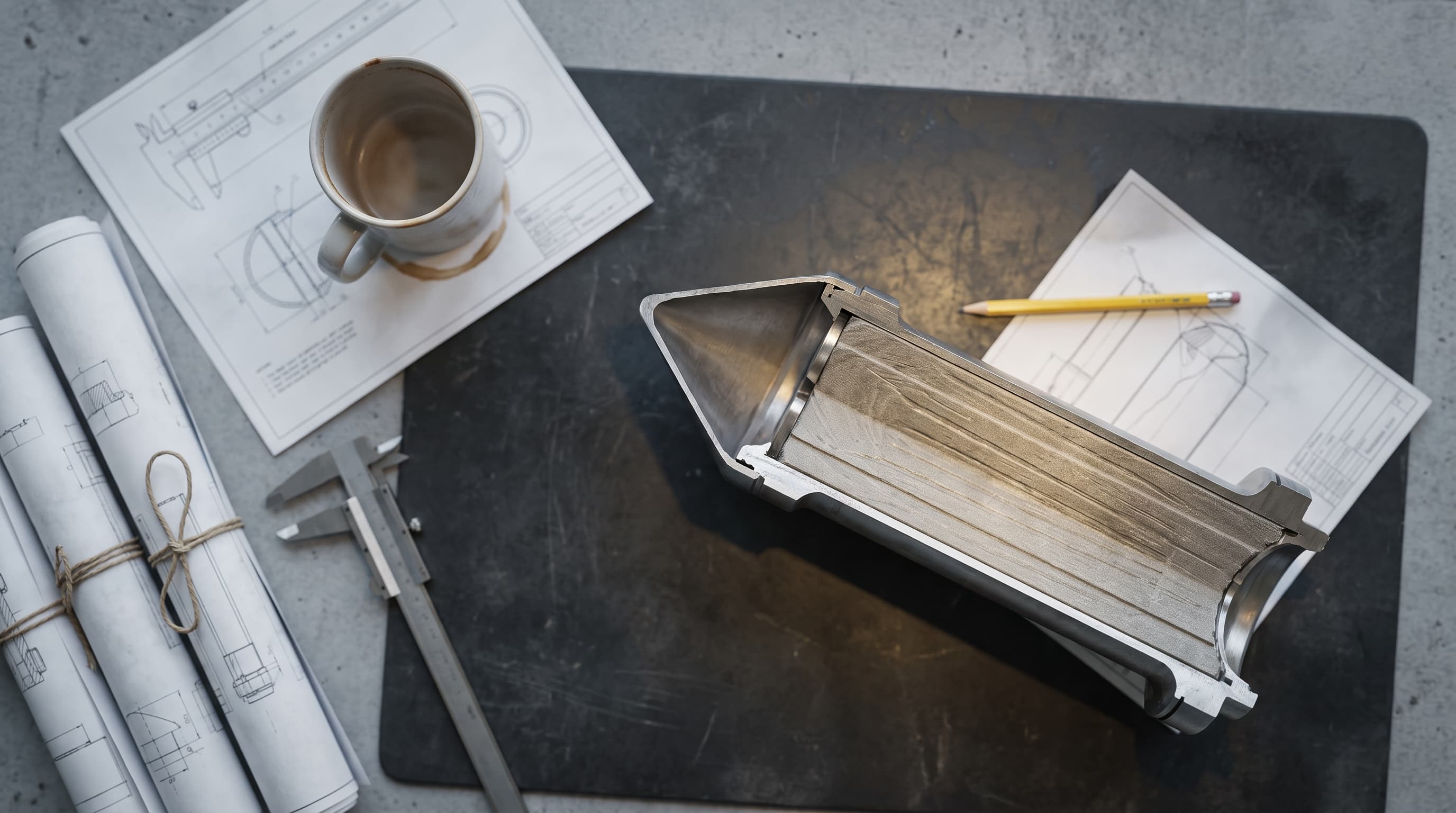
On Oct. 12, 2026, at the AUSA Annual Meeting and Exposition in Washington, Leidos selected X-Bow Systems to develop and produce booster motors for the US Army's Low-Cost Containerized Munition (LCCM), according to X-Bow. The award puts 3D printed solid rocket motors on a fixed production clock. More precisely, it puts X-Bow's additive process for making solid propellant on that clock. X-Bow says that "under the agreement, X-Bow will move through design, qualification testing, and static fires ahead of full-rate production of booster motors at scale in 2027."
That gives the company about a year to go from selection to full rate. Printing propellant can shorten part of the factory process. It can't shorten qualification, and it does nothing about a sub-tier that depends on a single domestic oxidizer source. Operators and investors should watch the period between the first static fire and acceptance of the first production lot.
What is the Low-Cost Containerized Munition, and why the rush?
LCCM is Leidos' entry in a Pentagon effort to buy cruise missiles in volume at fixed prices. On May 13, 2026, the Defense Department signed framework agreements with Anduril, CoAspire, Leidos and Zone 5 to "procure over 10,000 low-cost cruise missiles over three years beginning in 2027," Breaking Defense reported. The agreements "include firm-fixed material unit costs for production lots in 2027 through 2029."
Firm-fixed material unit costs change who carries the risk. When a booster runs late, needs rework or fails a static fire, the prime and its suppliers absorb the cost; it doesn't flow back to the government as a cost-plus adjustment. Military Times reported that the department planned to start buying test missiles from all four companies in June 2026 for an assessment phase.
The Leidos release says the company's initial order is 3,000 LCCMs and that "Leidos started LCCM work in December, reaching a conceptual design with the Pentagon." It adds that "full system design, development and test will result in production beginning in 2027." LCCM is "approximately twice the size of the AGM-190A," and Leidos is expanding production in Huntsville, Alabama and McEwen, Tennessee. "We're answering the Department of War's call to revolutionize procurement of critical capabilities at scale, with a focus on speed to operational capability," Leidos CEO Tom Bell said.
What does a booster motor do on a cruise missile?
The booster is the solid rocket motor that pushes the missile out of its launch container and up to flying speed, Defense Daily reported. It burns briefly at launch and is not the engine that carries the missile in cruise.
For the supply chain, that makes the booster a one-shot energetic component that must work every time in every containerized round. Defense Daily also reported that the Army's initial order to Leidos is expected to be 3,000 units, so X-Bow's first production commitment is measured in thousands of boosters.
How are solid rocket motors made conventionally, and what does 3D printing replace?
Conventional solid propellant is made in batches: it is mixed, cast into shape and cured, often in different buildings, and curing can take days or weeks. Additive approaches try to replace that sequence with one continuous, digitally controlled deposition process.
A Raytheon patent on propellant additive manufacturing (US10287218B2, filed in 2016) describes the conventional route. Mixing "may occur at a first location, the casting or other depositing of it to build up a propellant piece may occur at a second location, and the curing of the propellant piece may occur at a third location." The patent says the process "may involve considerable delays for the transportation between steps... with the curing process taking days or weeks." The patent belongs to Raytheon, not X-Bow, and is cited here only to describe the baseline that printing aims to replace.
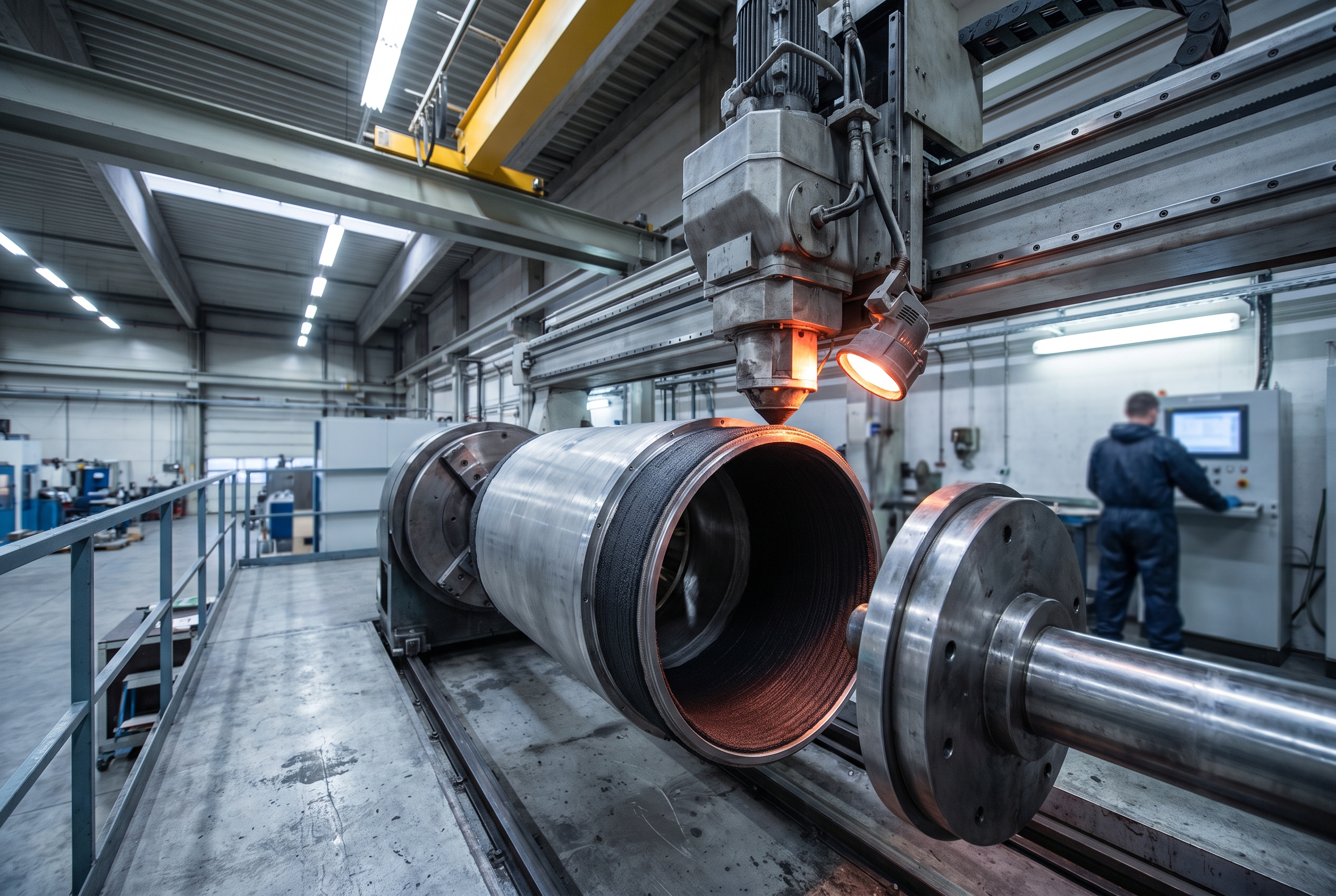
X-Bow's process is its patented Additive Manufacturing of Solid Propellant (AMSP). The company calls it "patented, digital-first, and flight-validated" and presents it as an alternative to "decades-old batch-based" motor production, according to its November 2025 facility announcement. The LCCM announcement says X-Bow will apply its additive process to the booster. It does not describe the booster's design, so the precise answer is that AMSP is being applied to this booster program.
The business case for printed propellant is mostly about cycle time and work in process. If mixing, deposition and curing take place in one controlled cell instead of moving between buildings, a plant can hold fewer partially finished motors and react faster when demand jumps. That case only pays off after the process is qualified for a particular motor.
What capacity is behind X-Bow's 2027 promise?
X-Bow finished installing its AMSP production line in Luling, Texas on Nov. 19, 2025. The company says the line will start at 1 million lb of energetics a year and grow to 3 million lb within 12 to 24 months. Those are company figures. X-Bow says that output equals roughly 3,000 to 3,800 Standard Missile motors or 30,000 to 50,000 tactical solid rocket motors a year. It funded the facility with about $40 million of its own private capital, plus co-investment from the US Air Force and DARPA. "Our Texas campus provides production and surge capacity for tactical, strategic, and hypersonic solid rocket motors," founder and CEO Jason Hundley said at the time.
X-Bow has some delivery history to point to. Defense Daily reported that the company recently delivered 2,100 rocket-assisted takeoff motors to AEVEX Corp. for its Disruptor drone and holds an active Navy contract for solid rocket motor boosters for the future Navy Modular Missile. In August 2025, X-Bow and the Army announced a $13.9 million cost-matched joint investment to design, prototype and static-fire an AMSP motor for the standard-range GMLRS. The DoD Office of Strategic Capital and Army PEO Missiles and Space were among the coordinators, and Kord Technologies, a KBR subsidiary, provides engineering support.
The company also says LCCM is one of six new propulsion programs it won in 2026 across the Navy, Army and Missile Defense Agency, and that "the company's revenue and backlog have more than doubled since 2023." On LCCM, Hundley said: "Modern conflict is decided by how many rounds you can put downrange, not how exquisite each one is." He added that the partnership lets X-Bow "turn out combat-ready rocket motors at production scale, fast."
Our analysis: an initial LCCM order in the low thousands is small next to X-Bow's stated nameplate capacity. Raw pounds of energetics are unlikely to be the binding constraint in 2027. Qualifying a new motor and getting its hardware and ingredients delivered on time are more likely to be.
Where do qualification and static fires usually slip?
Schedules usually slip at the hardware around the propellant (nozzles, insulation, cases and igniters) and whenever an ingredient changes, because one change can force requalification of the propellant, the motor and the missile. A printed propellant grain doesn't remove either risk.
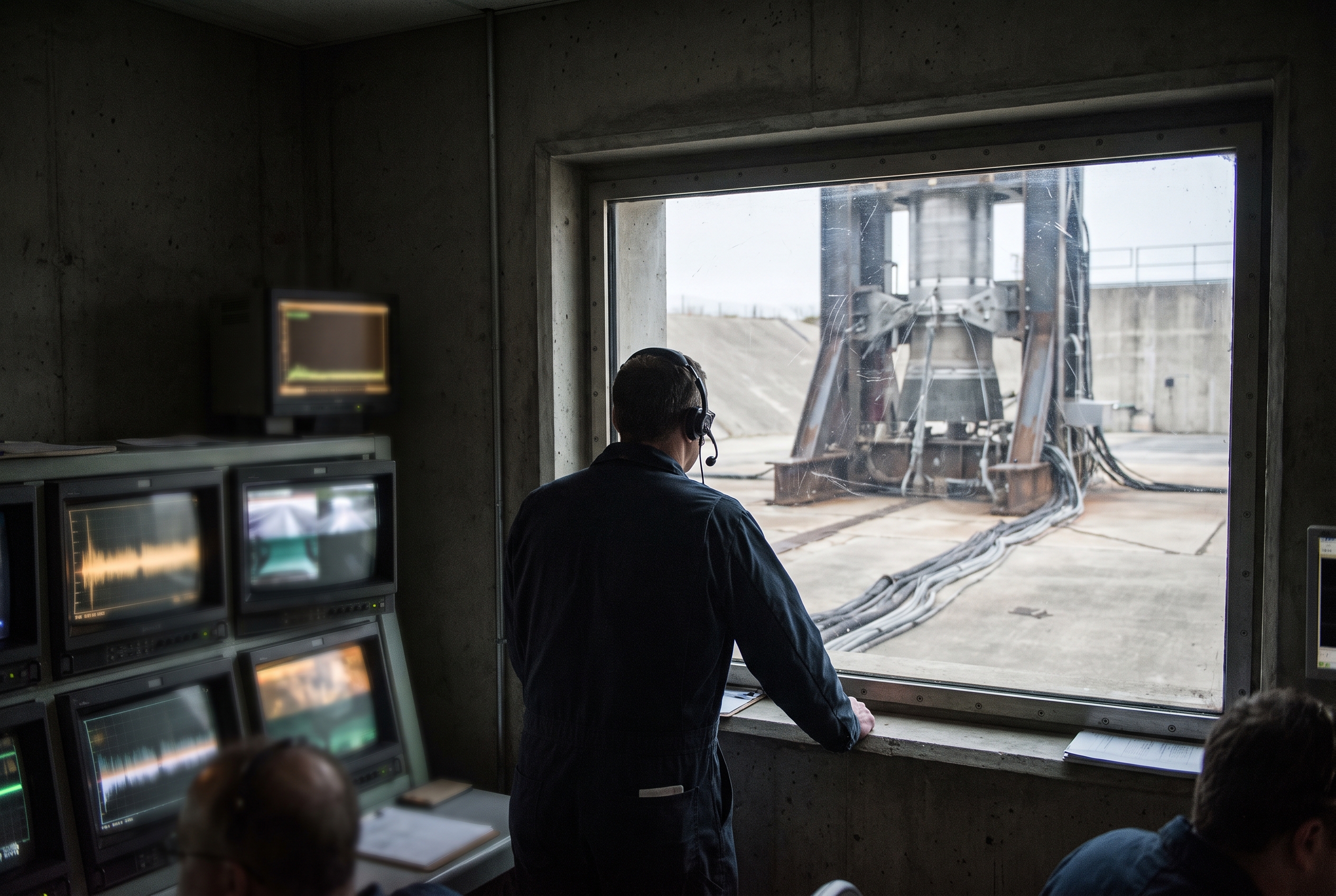
Breaking Defense's January 2026 report on the motor supply chain identified motor cases, igniters and insulation as chokepoints and said certain nozzles take 7 to 10 months to source. Andy Davis, Nammo's vice president of engineering and strategy, described what happens when an ingredient supplier disappears: "I then have to requalify the propellant. I then have to requalify, potentially, the rocket motor, and I have to potentially requalify the missile."
Mature motors still fail in exactly these areas. CBS News reported that about 20 seconds after a Vulcan liftoff in February 2026, one Northrop Grumman GEM 63XL booster had an apparent nozzle burn-through. It was Vulcan's second booster nozzle failure. The first, on the October 2024 second certification flight, "triggered a lengthy investigation and corrective action." The GEM 63XL is a large space-launch booster made conventionally, not a tactical motor. The relevant point is that nozzle and insulation problems can surface late and take months to resolve, whatever process produced the propellant.
Conventional new entrants are also working on long timelines. Breaking Defense reported on Oct. 13, 2026 that Avio USA will build motors for Lockheed Martin's Extended Range GMLRS and PrSM after qualification, at a "900,000-square-foot plant in Hurt, Va., [is] scheduled to start building motors in 2029." Incumbents are expanding too. The Defense Post reported that L3Harris won a $250 million standard-range GMLRS motor contract and that its Camden, Arkansas facility is due to open later in 2026, while Lockheed targets 14,000 GMLRS rockets a year across all sources.
The operator takeaway is to read X-Bow's 2027 date as a qualification schedule, not as a statement about factory capacity.
Which sub-tier materials limit solid rocket motor production?
The tightest inputs are ammonium perchlorate oxidizer, HTPB binder and long-lead hardware such as nozzles, cases, igniters and insulation. Each has few qualified suppliers, and switching suppliers sets off requalification.
-
Ammonium perchlorate: AMPAC is the only US-based source, a "single point of failure," according to Govini analysis cited by Breaking Defense.
-
HTPB-45M binder: Helicon Chemical is trying to become a second source, but a promised $15 million Pentagon contract stalled. Breaking Defense, citing CEO Jack Sarnicki, put qualification of Helicon's production at 18 months to two years.
-
Nozzles: some take 7 to 10 months to source.
-
Cases, igniters and insulation: also flagged as chokepoints.
The base has been shrinking for decades. GAO found in 2017 that "since 1995, the industry has consolidated from six U.S. manufacturers to two U.S. manufacturers," and that "one SRM manufacturer estimated a decrease in suppliers, from approximately 5,000 to 1,000, over the last 20 years."
For a purchasing manager, the key point is that an additive line still consumes the same kinds of oxidizer and binder as a batch line. It also needs nozzles, cases and igniters from the same thin supplier base. Printing changes how propellant is formed. It doesn't change where the ingredients come from.
What should suppliers and investors watch?
Watch static-fire results, qualification sign-off, delivery of the first production lots against firm-fixed unit costs, and whether X-Bow's other programs compete for the same capacity and inputs.
-
Static fires and qualification sign-off. These are the first public evidence that the booster design and AMSP process meet requirements. A nozzle or insulation problem found here could delay the schedule by months.
-
First production lots against fixed prices. The framework agreements fix material unit costs for 2027-2029 lots. Scrap, rework and yield on early lots will show up directly in supplier margins.
-
Competing demand on Luling and the sub-tier. X-Bow reports six new propulsion programs in 2026. In our analysis, if several move into production at the same time, they will draw on the same AMSP line, the same oxidizer and binder supply, and the same nozzle and case vendors. Investors should ask how capacity is allocated among programs.
-
Sub-tier qualification news. Any progress on a second domestic binder source, or any disruption at the sole ammonium perchlorate source, affects every motor maker, conventional or additive.
The bottom line
Printing can shorten the mix, cast and cure portion of motor production and reduce the work in process tied up in batch curing. It does not speed up qualification, and it does not add suppliers of oxidizer, binder or nozzles. X-Bow's full-rate date in 2027 depends on the static fires passing and on the sub-tier delivering on time. The Luling line's capacity matters less to that date than either of those.
Related reading
-
Who Owns Lockout/Tagout When a Contractor Services Your Equipment?
-
Will Boeing's Engineer Offer Reset Pay at Aerospace Suppliers?
-
If Boeing Engineers Strike, Who Signs Off on Supplier Deviations?
Sources
-
X-Bow To Supply Rocket Booster For Leidos Low-Cost Cruise Missile (Defense Daily)
-
US10287218B2: Solid propellant additive manufacturing method and system (Raytheon, Google Patents)
-
Avio, Lockheed sign agreement for solid rocket motor production (Breaking Defense, Oct. 13, 2026)
-
L3Harris Wins $250M Deal for Record GMLRS Rocket Motor Output (The Defense Post, Oct. 14, 2026)