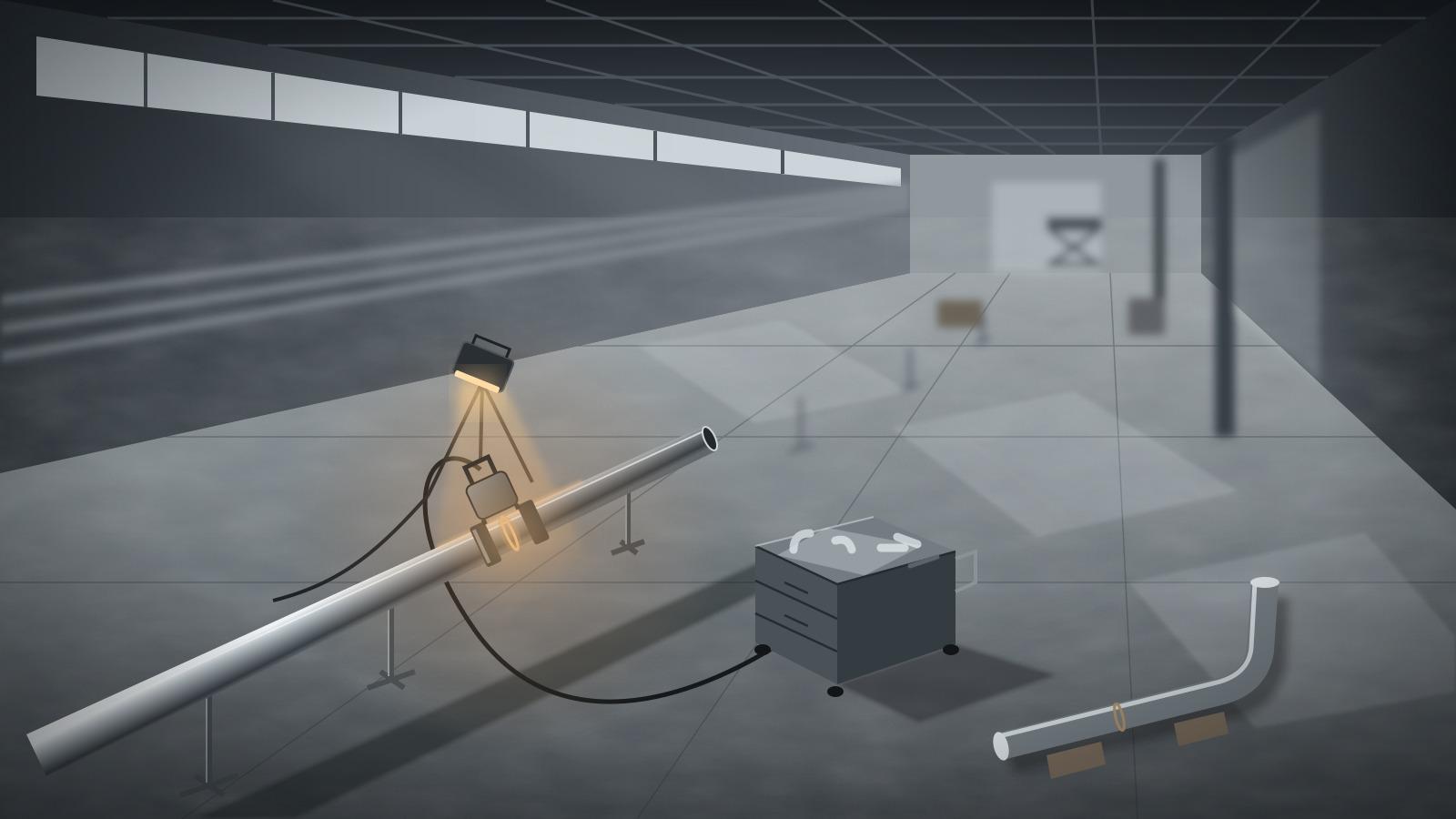
GlobalFoundries broke ground on Friday, Nov. 13, 2026, on the first of two planned 300mm fabs at its campus in Malta, N.Y., in Saratoga County. It's the first build under the U.S.-Japan initiative the company announced on Oct. 14. For a Capital Region machine shop, electrical contractor or cleanroom installer, the GlobalFoundries Malta new fab will show up as a series of buying waves between now and a 2029 start-up. GF has published only part of that schedule, and the funding headline doesn't tell a supplier much. The useful questions are which waves come first and who will be doing the buying.
About 350 guests attended, including Japanese diplomats and Gov. Kathy Hochul, according to The Daily Gazette. "Today, we're putting shovels in the ground and turning an ambitious partnership into reality," GF CEO Tim Breen said, according to the Governor's release.
What is committed, and what is conditional
GF's Oct. 14 release, filed with the SEC as a 6-K exhibit, says the initiative provides "up to $21 billion in funding." Japan supplies the investment. GF supplies the technology and manufacturing expertise and runs the fabs. The release separates the two fabs carefully. "An initial investment of approximately $10 billion will accelerate construction of a new 300mm semiconductor fab." "An additional investment of approximately $10 billion would fund a second fab." In GF's Q3 interim financial statements, the Malta facilities are still described as "proposed".
GF says the first fab will add about 900,000 300mm wafers a year of U.S. capacity and that a second fab "would add approximately the same amount." For comparison, Spectrum News reports that the existing Malta fab processes 400,000 wafers a year. GF's Q3 earnings release of Nov. 4 says construction is "already underway, with capacity expected to come online in 2029." Spectrum News reports there is no current timeline for the second fab.
The state calls the new building Fab 8.2. Its release lists about 386,000 square feet of cleanroom and describes a $12.3 billion multi-phase expansion at Luther Forest Technology Campus. That expansion also includes reinvestment in the existing fab and a new Advanced Packaging and Photonics Center, which WNYT also reported.
The job counts depend on who is speaking. GF says about 27,000 construction and ecosystem jobs and more than 1,000 high-skilled manufacturing jobs. Hochul's office says "more than 1,100 new manufacturing jobs."
For planning, count fab one as demand you can schedule around. Fab two is an option with no published date. A shop that adds capacity on the assumption of two fabs is betting on a decision nobody has announced.
How GF says it will buy
The most detailed public description of the procurement process isn't in a press release. It's in a job posting. A GF listing for a US Construction Expansion Sr Manager, posted Nov. 9 according to the Zapply aggregator, says the role will "lead all procurement for GF's new Fab 8.2 expansion in Malta, New York," "from early works and design through EPC/construction, tool install and hook-up, and handover to operations."
The listing names three buying categories: EPC and general contractors, cleanroom and facility systems, and tool-install and hook-up contractors. It lists "EPC, design-build, CM-at-risk, GMP, cost-plus, and target-cost models" as options, so the contracting structure was apparently still open four days before the groundbreaking. It also refers to prevailing wage, workforce and reporting obligations tied to the funding programs.
No general contractor, construction manager or design firm has been named publicly. Construction Dive's coverage of the October deal named none, and the groundbreaking coverage didn't either. Our inference: most local construction work will come as subcontracts under whoever wins the prime contract, not as purchase orders from GF. If GF picks an EPC model, one firm will control most of the subcontract decisions. Under CM-at-risk with a GMP, trade packages are usually bid out in stages, which gives regional firms more chances to bid. A prime contractor announcement is the signal to watch for, and it should come before any direct outreach to GF.
Construction trades: the labor terms are already set
The Nov. 13 release commits GF to a project labor agreement for construction. The state's Feb. 19, 2024 release, issued when the expansion was valued at $11.6 billion, said construction "will be pursuant to a project labor agreement with workers who will be paid federal prevailing wage rates, at a minimum." Any contractor bidding without union labor relationships and prevailing-wage costing already in place will be at a disadvantage on price and on paperwork.
The 2024 release also said GF "will work to ensure that 30 percent of the project's eligible construction spending and 20 percent of its eligible ongoing annual operating spending" goes to firms owned by people from traditionally underrepresented communities, with priority for New York State-certified minority- and women-owned businesses (MWBEs) and service-disabled veteran-owned businesses (SDVOBs). The 2026 releases don't repeat those percentages. They do commit GF to "onboarding local suppliers and workers," but no program, dollar target or qualification process was published with the groundbreaking. Eligible firms that lack state MWBE or SDVOB certification should get it. They shouldn't assume the 2024 percentages apply to Fab 8.2 until GF or the state says so.
State support totals $570 million: $535 million in Green CHIPS tax credits that are 100% performance-based, plus $35 million in grants for workforce development and public infrastructure. GF has also committed to $60 million in direct community investments and to onsite or adjacent childcare.
Cleanroom, facility systems and tool hook-up
GF lists cleanroom and facility systems and tool hook-up as separate procurement categories, and the distinction matters for specialty contractors. Facility systems go in with the building. Tool install and hook-up comes after the shell and before production. On a 2029 start-up, that puts hook-up work for mechanical, electrical, process piping and controls firms toward the end of the build. GF hasn't published dates for any phase. A firm with semiconductor or pharmaceutical cleanroom experience, documented welding and installation procedures, and the ability to staff a long job at prevailing wage fits these categories most directly.
Power and utilities
The New York Power Authority approved a 15 MW ReCharge NY allocation for GF in March 2024, plus 90 MW of High Load Factor power that NYPA buys for the company on the energy market. That's the documented power arrangement. The GF and state releases reviewed for this piece don't describe other utility supply contracts. Our analysis: large utility and gas contracts at fabs usually go to national vendors, so a regional firm's opening is in installation, distribution and ongoing maintenance around those systems, not in supplying the commodity.
The opening that comes sooner: interposers
For precision machine shops and spares suppliers, the first new demand may come from a separate project. GF's Q3 release says it "entered into a multi-year, $2 billion manufacturing agreement with TSMC to establish a U.S.-based supply of silicon interposers for TSMC's CoWoS advanced packaging ecosystem," and that "GF will add manufacturing capacity at its Malta, New York facility, with volume production expected to begin ramping in the first half of 2028." That's about a year before the new fab is due online.
GF and the U.S. government have also amended GF's CHIPS and Science Act award to reallocate $955 million to silicon photonics, SiGe and advanced packaging at Malta and Burlington, Vt. GF says the Commerce Department "will receive equity in GF of approximately four percent." GF says the new fab capacity will "support growing demand across automotive, industrial and connected infrastructure markets."
Direct supplier entry runs through the channels on GF's Suppliers page. Every supplier must follow the GF Supplier Code of Conduct, and GF is a member of the Responsible Business Alliance (RBA). Existing suppliers use a Supply Chain Collaboration portal on SAP Business Network and a Supplier Quality portal to "review quality standards, submit documents and quality-related materials." Manufacturing equipment purchases go through a Capital Equipment Procurement Document (CEPD). The page doesn't describe a local-sourcing program. Before quoting, read the Code of Conduct and understand what RBA membership means for your own audits and labor practices.
For a supplier weighing customer exposure, GF reported third-quarter revenue of $1.899 billion and guided fourth-quarter revenue to $2,000 million, plus or minus $25 million. Q3 purchases of property, plant, equipment and intangibles were $301 million, and non-IFRS capex net of government grants was $205 million.
A worksheet for shop owners
The table below is our analysis, built from the categories GF has named. It isn't GF guidance.
| Your capability | GF category it maps to | Likely buyer | Prepare now | Signal to watch |
|---|---|---|---|---|
| Site work, concrete, steel, general trades | EPC and general contractors | Prime contractor (not yet named) | PLA and prevailing-wage costing; state MWBE/SDVOB certification if eligible | Award of the prime contract and the contracting model |
| HVAC, cleanroom construction, electrical, controls | Cleanroom and facility systems | Prime or specialty subcontract tier | Cleanroom references, safety record, bonding capacity | Release of trade packages after the prime award |
| Process piping, tool install, hook-up crews | Tool-install and hook-up contractors | GF or the prime, depending on the model chosen | Documented procedures, crew depth through the late build phase | Shell completion ahead of 2029 start-up |
| Precision machining, spares, fixtures | Production supply (outside the construction categories) | GF directly | Supplier Code of Conduct, RBA expectations, Supplier Quality portal readiness | Interposer capacity ramp in 1H 2028 |
| Capital equipment | CEPD purchases | GF directly | Review the CEPD terms on gf.com | Tool orders for the new fab |
Labor will get tighter, and so will the roads
Any shop that wins work will also be competing with GF for workers. GF runs a Maintenance Technician Apprenticeship built with the Center for Economic Growth (CEG), Hudson Valley Community College, the Manufacturers Association of Central New York and SEMI, with CEG acting as intermediary with the state Department of Labor, according to a GF community impact report. If GF's estimate of about 27,000 construction and ecosystem jobs is close, local technicians and electricians will have more offers to choose from, and retention budgets should account for that.
Logistics will be a cost too. The Daily Gazette reports that part of the facility will be built in the Town of Stillwater and that "tens of thousands of construction workers" are expected to use Stonebreak Road Extension over the next several years. That's the road GF lists as its address in SEC filings. Delivery windows and crew travel times in that corridor will lengthen.
What is still open
Four questions will decide how much of this spending stays in the region. Who wins the general contractor or construction manager role, and under which contracting model? Will the second fab go ahead, and when? Will GF or the state publish local-supplier or diverse-spend targets specific to Fab 8.2? And how will utility needs beyond the NYPA power allocations be met? None of these had public answers when ground was broken.
Malta Town Supervisor Cynthia Young's comment in the state release was brief: "We are ready." Grant McEwan, vice president and general manager of the Malta fab, told Spectrum News: "The chips produced here will help enable technologies from AI to critical aerospace, defense systems and automotive."
This article draws on company and government releases, SEC filings and news coverage. ManufacturingMag did not visit the site or conduct interviews for this piece.
Related reading
-
Formnext 2026 new printers worth a production engineer's time
-
How the silicon interposer became the bottleneck in AI chip supply
Sources
-
Governor Hochul Celebrates the Groundbreaking of GlobalFoundries' New $10 Billion Semiconductor Manufacturing Facility in Saratoga County (Nov. 13, 2026)
-
GlobalFoundries 6-K Exhibit 99.1, press release of Oct. 14, 2026 (SEC EDGAR)
-
GlobalFoundries Q3 2026 earnings release (SEC EDGAR)
-
GlobalFoundries Q3 2026 interim financial statements (SEC EDGAR)
-
GlobalFoundries breaks ground on first new semiconductor fab under landmark U.S.-Japan initiative (Investing News Network)
-
In Malta, new chips, new jobs: fab construction starts (The Daily Gazette)
-
GlobalFoundries starts New York expansion with U.S.-Japan fab (Spectrum News)
-
GlobalFoundries breaks ground on new semiconductor manufacturing plant (WNYT)
-
GlobalFoundries building $21B New York fabs under US-Japan trade deal (Construction Dive)
-
US Construction Expansion Sr Manager, GlobalFoundries (Zapply job listing)
-
Governor Hochul Celebrates GlobalFoundries' $11.6 Billion Investment to Expand Semiconductor Manufacturing Plant in Saratoga County (Feb. 19, 2024)
-
NYPA board approves power allocations (March 26, 2024)