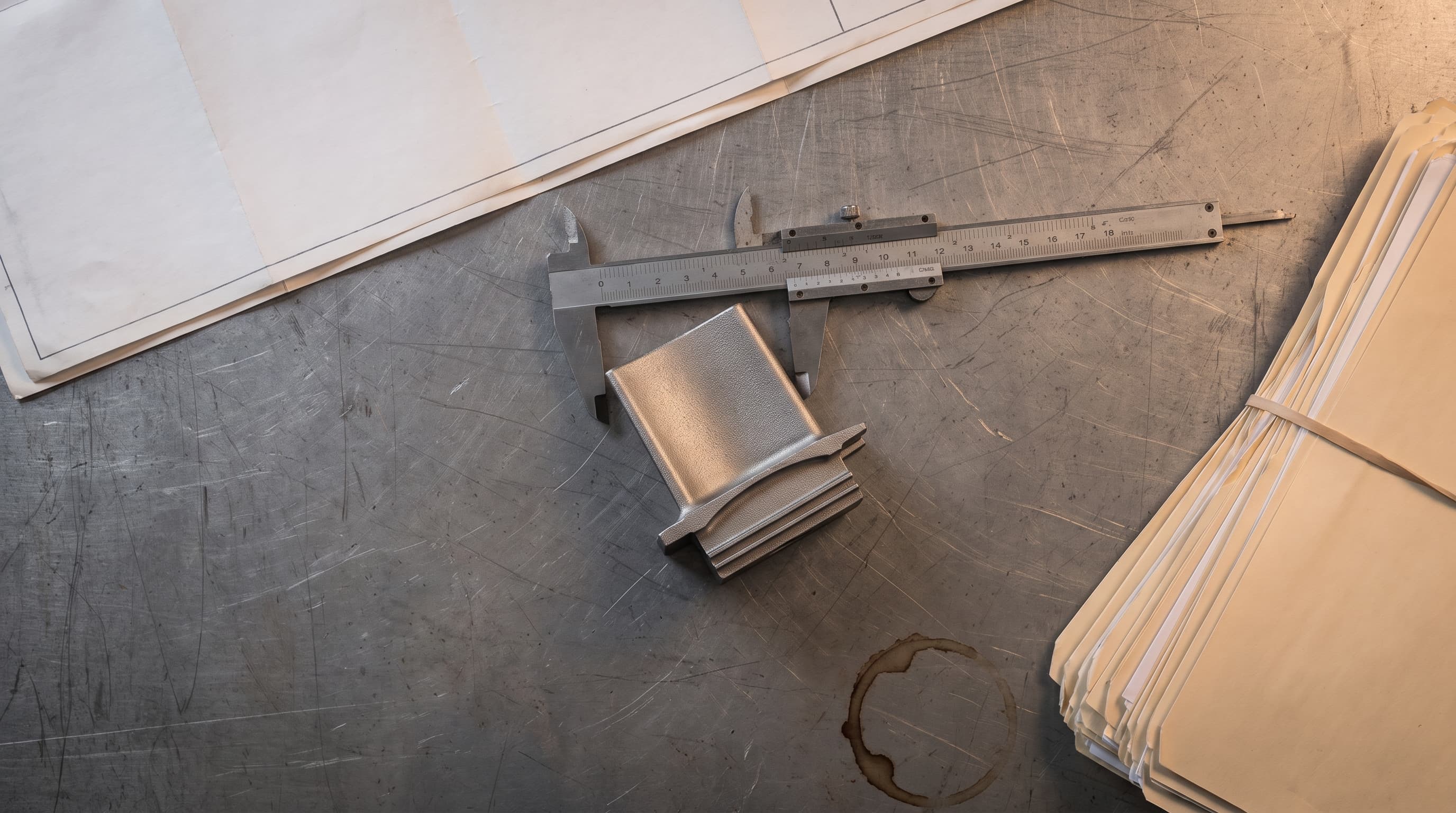
GE Aerospace said on Sept. 8, 2026 that it will buy Consolidated Precision Products for $11.75 billion, and the reason to care has little to do with the price. The deal moves one of the largest merchant casting suppliers in the aerospace castings supply chain behind a single engine maker's wall. If you run a foundry, a machine shop, a finishing house or a sub-assembly line anywhere below CPP, the operative questions are narrow: what changes, when it changes, and what work you should start before it does.
The short answers: very little changes this quarter, the structural change lands at your next long-term agreement renewal, and the qualification calendar is the binding constraint on capturing anything that moves.
What GE actually bought
Per GE Aerospace's announcement, CPP is being acquired from Warburg Pincus and Berkshire Partners for $11.75 billion, funded with $7 billion of existing cash plus new debt, with closing expected in the second half of 2027 subject to regulatory approvals.
CPP was founded in 1991 and is headquartered in Cleveland, Ohio. It employs roughly 6,600 people across more than 20 facilities globally, producing investment and precision sand castings in superalloy, titanium, aluminum, magnesium and steel. GE's 8-K investor materials put 2027 expected revenue at about $2.0 billion, split roughly 60% commercial aerospace, 20% defense and 20% power and other end markets.
The valuation frames the scarcity. GE describes the deal at roughly 18x 2027 EBITDA including about $200 million of expected net synergies from productivity, supply chain and procurement, which implies roughly 26x without them. GE expects the acquisition to be accretive to adjusted earnings per share and free cash flow in year one, with double-digit return on invested capital by year five. Buyers do not pay 26x for a commodity input.
Seller Warburg Pincus, which invested in CPP in 2011, names General Electric, Honeywell, Pratt & Whitney and Lockheed Martin among CPP's customers, with content on the 737, 777, 787, A320, A340, A380, F-35 and industrial gas turbines. GE's own filing says CPP "produces castings for nearly every major current gen commercial aircraft program." Read that sentence as a supply chain map, not a marketing line: a large share of merchant casting capacity serving the whole industry is changing owner.
Why castings, and why now
Castings are the chokepoint. Aviation Week described them as "perhaps the greatest chokepoint for the aerospace and defense sector." GE's investor deck projects airfoil demand growing more than 30% between 2026 and 2030 across commercial engines, aftermarket and defense. That is the demand curve GE is buying against, and it is not a curve you close with overtime.
The reason the merchant market has not simply added capacity is documented in BCG's 2024 study of aerospace casting and forging. BCG found titanium lead times running roughly nine months, and a single-sourced high-demand steel alloy at 70-80 weeks. Its explanation is not metallurgical. Casting and forging suppliers stopped trusting OEM demand forecasts after the 2020-21 collapse and the 737 MAX production halt, took the writedowns, and declined to fund new furnaces on the strength of a new forecast. The under-investment is a trust problem, and vertical integration is one way an OEM resolves a trust problem: it stops asking a supplier to take the risk and takes the risk itself.
Worth holding alongside the deal: GE has been spending organically too. On March 9, 2026 it announced $1 billion across U.S. manufacturing in 2026, covering more than 30 communities in 17 states, including more than $100 million invested directly in its external supplier base for tooling and equipment, plus 5,000 U.S. hires. That is more than $2.5 billion announced since 2024. GE is not only buying capacity; it is also paying for capacity it does not own.
The timeline: what does not change before the second half of 2027
This is the part most coverage skipped, and it is the part that governs your calendar.
The transaction does not close until the second half of 2027, subject to regulatory approvals. Until close, CPP is an independent company owned by Warburg Pincus and Berkshire Partners. Your purchase orders are unchanged. Your long-term agreements are unchanged. Quote books, allocations and expedite behavior are governed by contracts signed before Sept. 8, 2026 and are not voided by an announcement.
What that means practically: there is no operational emergency this quarter, and anyone selling you one is selling something. The repositioning happens at renewal, which is why the single highest-value hour you can spend in the next month is pulling every LTA whose renewal or renegotiation window falls in 2027 or 2028 and marking which ones touch CPP plants.
The market already repriced bargaining power
Reuters reported Howmet Aerospace shares fell about 8% on the announcement. That move is the cleanest available read on what the market thinks the deal does to merchant casting economics.
The concentration behind that reaction is disclosed in Howmet's own SEC filings, which identify CPP as an investment-castings competitor and show RTX at roughly 11% and GE Aerospace at roughly 10% of third-party sales. Two engine OEMs account for roughly a fifth of a major merchant caster's outside revenue. When one of those two acquires its own capacity, the negotiating table changes shape for everyone still selling into it.
Translate that into what a purchasing manager will hear on a call over the next several quarters. Expect merchant casters to compete harder for non-GE volume, because that is the volume that remains contestable. Expect more willingness to discuss capacity reservation and lead-time commitments, and less willingness to hold open-ended pricing for GE-adjacent programs. Expect nothing at all to be said on the record while the transaction is pending: Pratt & Whitney and Howmet both declined to comment to Reuters.
What it means if you sit below CPP
Two forces point in opposite directions, and which one dominates depends on your part numbers, not on the headline.
Allocation risk. If GE internal programs get scheduling priority inside CPP plants after close, non-GE work sitting in the same furnaces competes for the same slots. Nobody has said this will happen. It is the risk the Howmet share price is pricing.
The offsetting reality. Captive plants still buy outside. Castings go out to machining, finishing, heat treat, coating, non-destructive testing and tooling. A vertically integrated CPP is not a vertically integrated supply chain, and GE's $100 million-plus into external supplier tooling and equipment in 2026 is evidence it intends to keep buying those services rather than build them all.
An honest caveat here matters more than a confident one. Several secondary write-ups have reported that CPP will operate as a standalone unit preserving existing customer relationships. That statement does not appear in GE's press release or in its 8-K exhibits. Treat it as an open question. Robert Stallard of Vertical Research made the same point to Reuters: it remains to be seen whether the deal affects CPP's non-GE customers. Until GE says otherwise on the record, plan around the uncertainty rather than around the reassurance.
The real opening: second sources funded by somebody else
Here is where displaced work actually comes from. CPP's non-GE customers, Honeywell, Pratt & Whitney and Lockheed Martin among those named by the seller, now have a board-level reason to fund a second source for parts that route through CPP plants. That is not a hypothetical procurement preference. It is the standard response of a prime or an engine maker when a critical supplier ends up owned by a competitor.
Second sourcing in aerospace castings is expensive and slow, which is precisely why the funding decision has to be made early and why it usually comes with customer money attached: qualification support, tooling investment, sometimes a capacity reservation payment. The next 24 months is when those packages get written. If you want one, you need to be credible before the request for information goes out, not after.
How to qualify as a second source in castings
The calendar, not the capital, is the constraint. Work the sequence in parallel wherever you can.
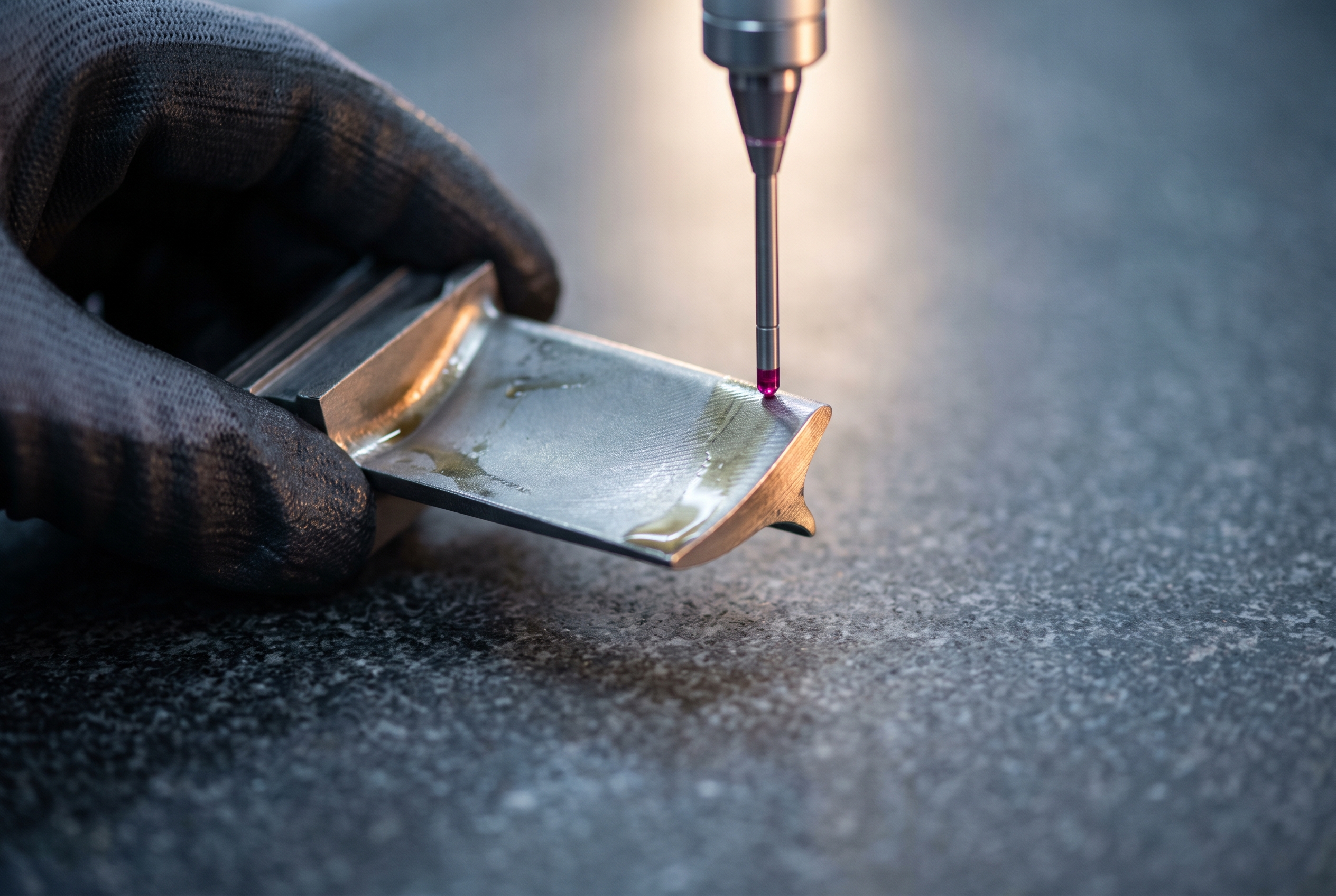
1. Start Nadcap now, because the clock is long
The Performance Review Institute published Nadcap audit criteria for investment casting and sand casting in February 2023, developed jointly by OEM and casting-supplier experts. That is recent, which means a large share of the foundry base has never been through it. The castings program scope and PRI's getting-started guidance describe what you must actually pass. Budget 6-12 months for first-time accreditation in practice, and 12-18 months if your documentation, procedures and internal audit evidence are not already in order. That window closes before first-article approval even begins.
2. Get AS9100 and your process documentation defensible first
Nadcap audits the special process. The quality system underneath it has to exist already. Foundries that fail their first casting audit usually fail on records, traceability and process control evidence rather than on metallurgy.
3. Settle tooling ownership before you need it
Patterns, dies and wax tooling are the physical bottleneck on any source transfer. Establish in writing who owns each tool, who pays for duplication, where masters are stored, and what notice is required to move them. Negotiate transfer rights during the pending period, while the incumbent still has commercial reasons to be accommodating, rather than after close when the answer gets routed through a new owner.
4. Know what the customer will ask for in return
A customer funding a second source will want a capacity commitment: reserved furnace hours, a defined ramp, and often a floor volume you have to hold open whether or not it is called. Price that idle capacity honestly in your model. Carrying qualified-but-idle capacity is the product you are selling in a supply chain that just demonstrated what scarcity is worth.
5. Map your exposure by part number
Audit which of your part numbers route through CPP plants today, in either direction: as your supplier or as your customer. That map is what turns every point above from general advice into a specific list of programs to defend or pursue.
The antitrust question, handled honestly
GE chief executive Larry Culp has said he does not expect antitrust barriers to closing, per Aviation Week. He may well be right, and the deal is structured on that assumption with a close date more than a year out.
The precedent for the other outcome is recent and directly on point. In January 2022 the FTC sued to block Lockheed Martin's $4.4 billion acquisition of Aerojet Rocketdyne, arguing that a prime contractor controlling a critical supplier could harm rival primes. The parties abandoned the deal in February 2022. That is the live vertical theory of harm in aerospace and defense, and CPP's customer list includes direct competitors to GE in engines.
The planning implication is not that the deal fails. It is that a regulatory remedy, if one is imposed, would most likely take the form of commitments about serving non-GE customers. Those commitments would be public, and they would be worth reading closely, because they would answer the standalone-unit question that GE has so far left open.
Three things to do this quarter
First, pull every long-term agreement with a renewal or renegotiation date in 2027 and 2028 and flag the ones with CPP exposure. That is where the structural change actually reaches you.
Second, audit your part numbers against CPP's plant footprint so you know your exposure as a number rather than a worry.
Third, if you have any intention of bidding second-source casting work, start Nadcap and source-qualification groundwork now. A deal that closes in the second half of 2027 and a qualification path that runs 12-18 months before first article means the work starts this year or you are not in the conversation.
Related reading
-
Machinery and Fabricated Metal Carried August's Factory Hiring
-
GM Walked Away From a 680-Acre Battery Plant. Samsung SDI Is Finishing It for the Grid.
-
Two to Three Years of Samarium: The Magnet the Pentagon Can't Tariff Its Way Out Of
-
$1.966 Trillion Announced, 22% Less Built: The Reshoring Boom Is a Press-Release Boom
Sources
-
GE Aerospace to Acquire Consolidated Precision Products (CPP), GE Aerospace press release, Sept. 8, 2026.
-
General Electric Co. Form 8-K, Exhibit 99.1 and Exhibit 99.2, September 2026.
-
GE Aerospace to buy castings maker CPP for nearly US$12 billion, Reuters.
-
GE Aerospace To Buy Consolidated Precision Products In $12B Deal, Aviation Week.
-
Fixing Aerospace's Supply Chain: Casting and Forging, BCG, 2024.
-
Consolidated Precision Products, Warburg Pincus portfolio page.
-
Howmet Aerospace Inc. Form 10-K, SEC EDGAR.
-
GE Aerospace to Invest Another $1B in U.S. Manufacturing, March 9, 2026.
-
FTC Sues to Block Lockheed Martin's Acquisition of Aerojet Rocketdyne and Statement Regarding Termination, FTC, 2022.
-
Nadcap program announces audit criteria for casting, Metallic Materials Manufacturing: Castings, and Getting Started with a Nadcap Accreditation, Performance Review Institute.